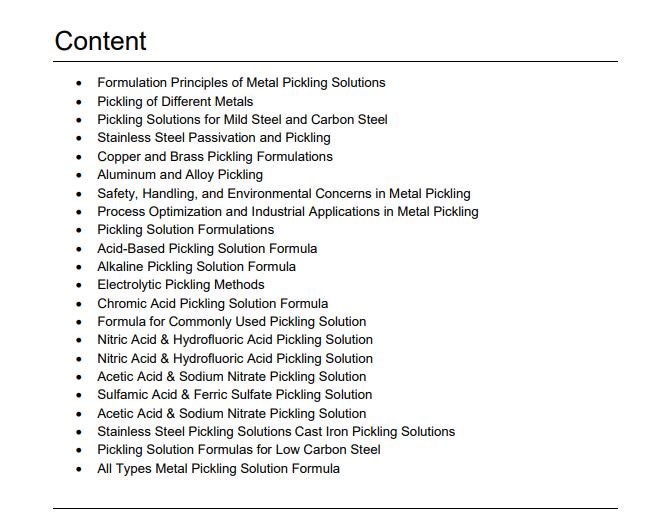
Metal Pickling Solution Formula
USD $60
PDF manual · Instant downloadPayment Methods
Refund Policy
Custom Formulation Services
Formulation Consultation
Contact Us
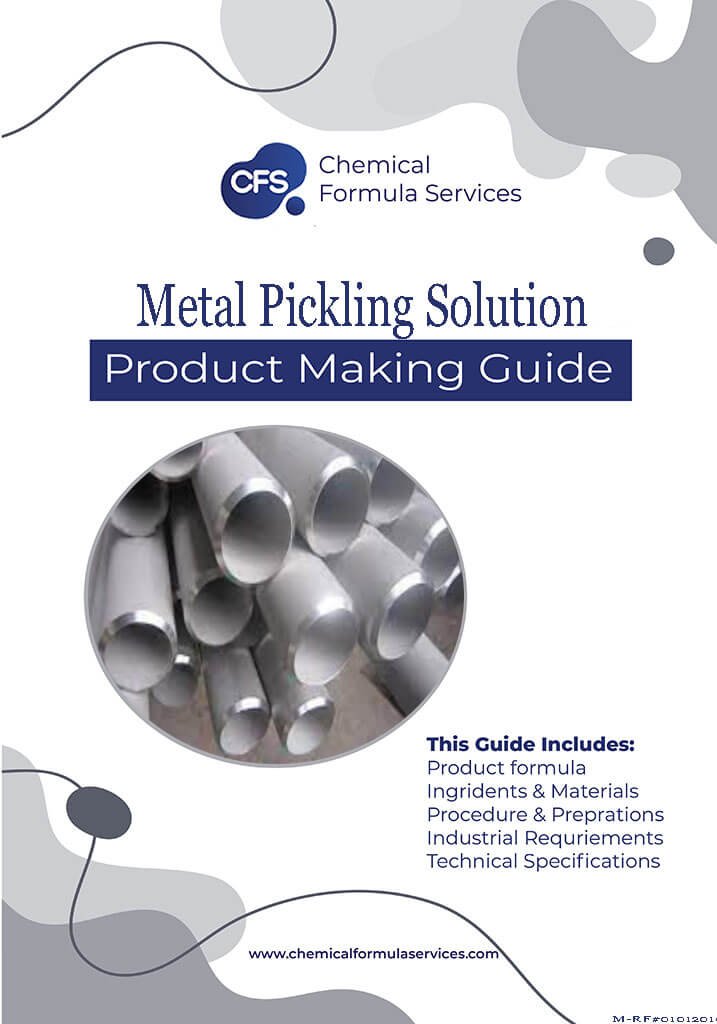
A metal pickling solution is a chemical bath used in metalworking and surface treatment processes to remove impurities, scale, oxides, and other surface contaminants from metal surfaces. The pickling process prepares the metal for further treatment, such as plating, painting, or welding, by ensuring a clean and uniform surface.
The pickling solution typically consists of acids, such as hydrochloric acid (HCl), sulfuric acid (H2SO4), nitric acid (HNO3), or a mixture of these acids. The choice of acid and its concentration depends on the type of metal being treated and the level of cleaning required.
The pickling process can be carried out through various methods, such as immersion pickling or brush pickling. Immersion pickling involves immersing the metal object in the pickling solution, while brush pickling applies the pickling solution directly to the metal surface using brushes or other applicators.
Using a metal pickling solution
- Safety Precautions: Metal pickling solutions contain strong acids, which can be hazardous to handle. It’s essential to follow safety guidelines, wear appropriate personal protective equipment (PPE), and work in a well-ventilated area to avoid inhalation of fumes and contact with the skin or eyes.
- Material Compatibility: Different metals and alloys may require specific pickling solutions. Ensure that the pickling solution you use is compatible with the metal you are treating to prevent damage or unwanted reactions.
- Surface Preparation: Before pickling, the metal surface should be properly cleaned and degreased to ensure effective pickling and remove any surface contaminants.
- Pickling Time: The duration of pickling varies depending on the metal and the level of cleaning required. The metal object should be immersed or treated with the pickling solution for the appropriate amount of time to achieve the desired results without over-pickling.
- Neutralization and Rinse: After pickling, the metal object should be thoroughly rinsed with water to remove the pickling solution. In some cases, a neutralization step may be required to neutralize any remaining acid before further treatment or disposal.
- Waste Disposal: Proper disposal of used pickling solutions is crucial to prevent environmental contamination. Follow local regulations and guidelines for the safe disposal of pickling waste.
- Post-Pickling Treatment: Depending on the application, the metal object may require additional treatment, such as passivation, to protect the surface from further corrosion.
Startup business
With the help of this formulation all metal can be easily pickled in this solution either they are ferrous or non ferrous metals .Both metal cleaning and passivation are chemical treatments applied to the surface of stainless steel to remove contaminants and assist the formation of a continuous chromium-oxide, passive film. Pickling and passivation are both acid treatments .