
Metal Derusting Solution Formulation
USD $70
PDF manual · Instant downloadMetal Derusting Solution Formulation: a PDF guide to rust removers and rust converters, with acid, chelant and converter chemistries, manufacturing, use and testing.
Payment Methods
Refund Policy
Custom Formulation Services
Formulation Consultation
Contact Us
Metal Derusting Solution Formulation is a practical PDF guide for metal-treatment chemical manufacturers, hardware and maintenance suppliers, startups and entrepreneurs who want to make a metal derusting solution, also known as a rust remover or rust converter. It is a chemical product designed to remove rust from metal surfaces. Rust is the result of the oxidation of iron or steel when exposed to moisture and oxygen over time, and a derusting solution works either by dissolving the iron oxide or by converting it into a more stable compound that prevents further corrosion. This page explains how a metal derusting solution formulation works, what goes into a metal derusting solution formula, how it is made, tested and used safely, and how to build a business around it.
This guide is published by Chemical Formulation Services, the formulation publishing and consultancy business of CFS Formulation Services Ltd in Sheffield, United Kingdom. It is written for people who want to understand the product from the raw material to the finished pack, and it keeps its claims practical rather than promotional.
At a glance
- Product: Metal Derusting Solution Formulation, a digital PDF Product Making Guide.
- Also searched as: metal derusting solution formula, rust remover formulation, rust converter formula, iron oxide remover, descaling solution.
- Types: acid-based removers, chelant-based removers and rust converters.
- Key goals: remove or convert rust, protect bare metal and avoid damaging base metal.
- Who it is for: metal-treatment and maintenance chemical makers, hardware suppliers and entrepreneurs.
- Delivery: instant PDF download after payment is confirmed.
- Publisher: CFS Formulation Services Ltd, England and Wales company number 16678503.
What rust is and why removing it matters
Rust is hydrated iron oxide, a flaky, porous, reddish-brown layer that forms when iron or steel meets oxygen and water. Unlike the thin oxide on aluminium, which protects the metal, rust does not protect steel. It is porous, holds moisture and lets corrosion continue beneath it, eating deeper into the metal. Left alone, rust weakens structures, jams mechanisms, ruins tools, spoils appearance and prevents paint from sticking. Removing rust, or converting it into something stable, is therefore a basic maintenance task in workshops, factories, farms, shipyards, railways, building sites and homes.
How derusting chemistries work
Acid dissolving (pickling-type removers)
Acids such as phosphoric, hydrochloric, sulphuric, citric and oxalic acid dissolve iron oxide, turning it into soluble iron salts that wash away. They work fast but attack bare steel as well if left too long, so inhibitors are added to protect the base metal. Phosphoric acid also leaves a thin protective iron-phosphate layer on the steel, giving some temporary protection and a good key for paint.
Chelation
Chelating agents such as citric acid, EDTA, gluconate, tartrate and oxalate bind iron ions and pull them out of the rust layer into solution. They are gentler than strong acids, work at near-neutral to mildly acidic pH, and are friendly to the base metal and the user. They may be slower, and are often used in soaking baths or gels.
Rust converters
Instead of removing rust, a converter transforms the iron oxides into a stable, inert compound, usually a black iron tannate or iron phosphate layer, which acts as a primer. Tannic acid, phosphoric acid and polymer binders are common ingredients. Converters are brushed or sprayed onto remaining, firmly bonded rust, then overpainted. They save labour on large structures where complete rust removal is impractical, but they only work on well-adhered rust, not on thick flaking scale.
Alkaline and electrolytic methods
Alkaline chelant baths and electrolytic derusting, using a washing soda solution and an electric current, are used by restorers for delicate items. They are outside the main scope of most commercial products but can complement a product range.
Ingredients of a derusting solution
- Acids: phosphoric acid, citric acid, oxalic acid, hydrochloric acid or others, chosen for speed, safety and metal compatibility.
- Chelating agents: citrate, gluconate, EDTA, tartrate.
- Corrosion inhibitors: amine-based, thiourea-derivatives or other organic inhibitors that protect the steel from acid attack, selected according to regulation.
- Surfactants and wetting agents: help the liquid penetrate rust and oil, and improve rinsing.
- Thickeners: cellulose or polymer thickeners to make gels that cling to vertical surfaces.
- Tannic acid or tannin extracts: in converters.
- Film-forming resins: acrylic or other polymers in converters, to bind the converted layer and form a primer.
- Solvents: glycols or alcohols that help penetrate and carry.
- Water: carrier.
Picking the right derusting method for the job
Customers rarely need a single product. A mechanic with a rusty bolt wants a quick penetrating liquid. A restorer with a delicate antique tool wants a gentle chelant soak that will not pit the metal. A farmer with a rusty harrow wants a brush-on converter that saves hours of grinding. A shipyard needs a heavy-duty acid gel for large steel plates. A plating shop needs a pickling bath that strips scale and oxide before coating. Offering a small ladder of products, from mild to strong and from liquid to gel to converter, covers these needs and lets you guide each customer to the right choice instead of selling a harsh acid for every job.
Protecting the surface after derusting
Bare steel starts to re-rust within hours, sometimes minutes, in humid air. After derusting, rinse carefully, dry thoroughly (compressed air or warm air), and protect at once. Options include phosphate conversion coatings, light oil or wax for tools, primer and paint for structures, or galvanising and plating for production parts. Some derusting products already contain phosphoric acid, leaving a thin phosphate layer that serves as a primer base, which is a selling point. Instruct users not to leave treated metal exposed, and sell compatible primers or oils with the derusting product.
Common mistakes customers make
Many complaints trace to misuse. Using too strong a solution on thin or hardened steel can cause hydrogen embrittlement or pitting. Leaving parts in acid overnight over-etches them. Mixing different cleaners generates toxic fumes. Applying a converter over oily, wet or loosely flaking rust causes peeling. Painting before the converter cures traps solvent and moisture. Clear step-by-step label instructions, with pictures where possible, and a short troubleshooting section on your data sheet prevent most of these problems.
Packaging and shelf life
Use HDPE or polypropylene containers with acid-resistant closures. Phosphoric and citric acid products are stable for a year or more if sealed. Converters containing polymer emulsions must be protected from freezing. Gels should not dry out or separate, so test stability at elevated temperature. Label batch numbers, dates, hazard information and disposal advice. For aerosol rust removers, choose valves and propellants compatible with the formula and follow aerosol safety rules.
What is inside the Metal Derusting Solution Formulation guide
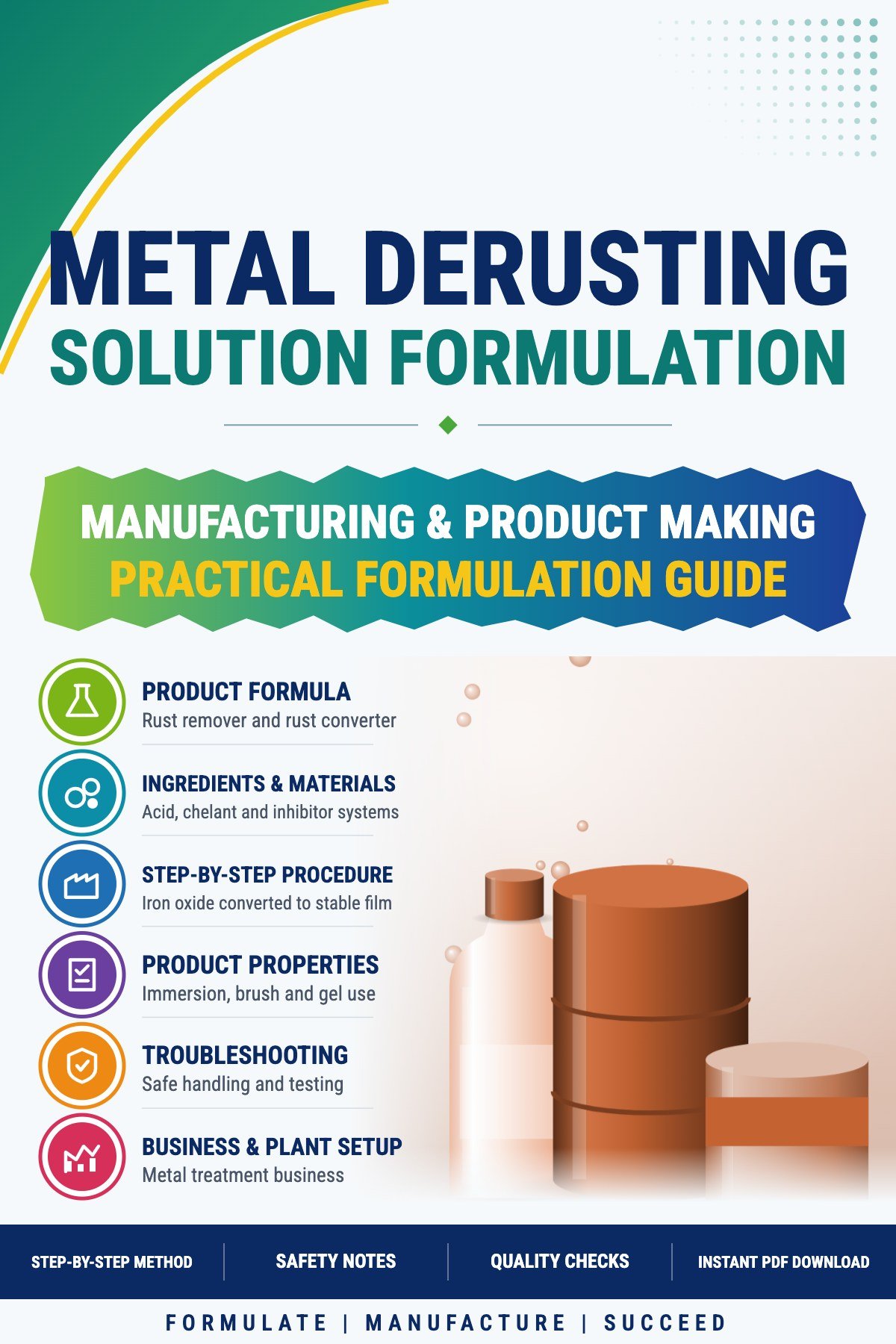
The guide explains that a metal derusting solution, also known as a rust remover or rust converter, is a chemical product designed to remove rust from metal surfaces, that rust results from oxidation of iron or steel exposed to moisture and oxygen, and that the solution works by converting iron oxide into a more stable compound and preventing further corrosion. It covers several types, and gives formulations, manufacturing procedures, application methods, testing and troubleshooting.
How the solution is made
Preparing the plant
Use acid-resistant plastic (polyethylene or polypropylene) or glass-lined tanks and pipework. Provide ventilation, spill containment, eyewash and safety showers.
Charging water and chelant
Charge water, then dissolve the chelating agent and organic acids, mixing until clear.
Adding mineral acid carefully
Add phosphoric acid or other mineral acid slowly to the water, never water to concentrated acid, controlling temperature as heat is released.
Adding inhibitor, surfactant and thickener
Blend in the corrosion inhibitor and surfactants. For gels, disperse the thickener carefully to avoid lumps and allow time to hydrate.
Making a converter
Dissolve tannic acid in water or glycol, add phosphoric acid and the film-forming resin emulsion under stirring, then adjust pH and viscosity.
Quality check and filling
Check pH, acidity, density, appearance and viscosity. Fill into acid-compatible containers with vented caps where gas can form.
How to use derusting products
Remove loose scale and flaking rust with a wire brush, scraper or sand paper, and degrease the surface. For immersion, soak small parts in the solution for the stated time, check progress, then lift out, rinse thoroughly, dry and apply oil, primer or paint to prevent flash rusting. For gels, apply with a brush, leave for the specified period, then wipe off and rinse. For converters, brush a thin coat on dry, tightly adhering rust, wait for the colour change to black, allow to cure, and overcoat with a compatible primer or paint. Always test on a small area first.
Testing and quality control
- Rust removal efficiency: weigh rusted steel coupons before and after treatment, and check time to clean.
- Base metal attack: weight loss of clean steel coupons in the solution, with and without inhibitor.
- Flash rust tendency: time to re-rust after rinsing and drying.
- Converter performance: colour change, film adhesion, salt-spray test of converted and painted panels.
- pH and acid content: by titration.
- Viscosity of gels: cling on vertical surfaces.
- Stability: storage at temperature extremes.
- Compatibility: effects on paint, rubber, plastics and non-ferrous metals.
Troubleshooting
Slow rust removal
Low acid concentration or cold temperature. Increase active level, warm the solution slightly and agitate.
Etching or pitting of the base metal
Inhibitor missing or exposure too long. Add or improve inhibitor and shorten time.
Flash rust after rinsing
Wet steel re-oxidises quickly. Dry immediately, apply oil or phosphate rinse and coat promptly.
Converter peels or stays sticky
Rust too thick, loose or surface wet. Remove flaking rust first, apply thin coats and allow proper cure.
White residue or smut
Insoluble salts left from acid. Rinse thoroughly and use chelants.
Gel runs or dries out
Wrong thickener level or poor wetting. Adjust viscosity and add humectant.
Safety and environmental responsibility
Many derusting products are corrosive. Hydrochloric and sulphuric acids give off fumes, phosphoric and oxalic acids burn skin and eyes, and oxalic acid is toxic if swallowed. Wear acid-resistant gloves, goggles, face shields and aprons, work in well-ventilated areas and never mix products. Acid reacting with steel releases hydrogen, which is flammable, so avoid sparks and open flames near baths. Never use chlorine bleach with acids. Spent solutions contain dissolved iron and acid and often metals from coatings, so neutralise and dispose of them according to local rules, and never discharge to drains or soil without permission. Provide safety data sheets, hazard labels and first-aid instructions.
Business opportunity
Rust is everywhere, so demand is constant. Customers include hardware shops, garages and auto repair, farms and agricultural equipment owners, boat and marine users, building maintenance firms, steel fabricators, oil and gas, railways, utilities and DIY. Products include ready-to-use rust remover liquid, thick gel for vertical surfaces, immersion concentrate for workshops, brush-on converter primer and aerosol spray. Strong branding, clear instructions and before-and-after demonstrations sell the products. Industrial buyers value technical data and consistent quality, and bulk sales in drums and IBCs. Pair with primers, paints, oils and cleaning products for a complete corrosion-control line.
Related CFS guides help you build a metal-treatment range. Browse the Metal Treatment, Electroplating Formula and Coating Formulations categories, and see Metal Pickling Paste Formulation, , Lead Alloy Coating on Steel, Electroless Black Nickel Coating, and Epoxy Marine Coating Formula.
Getting started
Begin with a safer chelant and citric acid based remover and a phosphoric acid converter. Make small batches, test on rusty bolts and steel plates, measure weight loss and time, and compare with leading brands. Prepare labels with clear safety and usage instructions, and approach local garages, hardware shops and farm suppliers with samples. Use feedback to refine strength, viscosity and fragrance, and then expand to acid pickling concentrates and gels.
How to get the best results from this guide
Treat the guide as a tested starting point rather than a finished factory. Begin with a small trial batch in the laboratory or on a bench, using the exact raw materials you plan to buy, and record every weight, temperature, mixing time and observation. Compare the result with the quality checks in the guide, change only one thing at a time, and keep a note of what each change did. Once a small batch is consistently good, repeat it several times, then scale up in stages, because mixing, heating and cooling behave differently in larger vessels. Keep retained samples of every batch, write simple standard operating procedures for your team, and build relationships with two suppliers for each key raw material. Finally, check the labelling, safety and product rules in the country where you will sell, and ask a qualified person to review your process. This careful, documented approach is what turns a good formulation into a reliable product and a trusted brand.
Who should buy this guide?
The guide is written for practical readers. It suits manufacturers who want to add a new product to an existing plant, startups choosing their first product, private-label brands that need to understand what they are buying, technical staff who must set specifications and train operators, and consultants and students who want a structured, plain-language reference. It is less suitable for anyone looking for a quick shortcut or a guarantee, because every formulation still needs testing with your own materials, equipment and local rules. If you are unsure whether it matches your project, send a short question through the contact page before you order, and we will tell you honestly whether it fits.
What is inside the Metal Derusting Solution Formulation guide
Every Product Making Guide in our shop follows the same structure so you know where to look. This guide includes the product formula, the ingredients and materials, the procedure and preparations, the industrial requirements and the technical specifications. In practice you receive:
- The formulation, written so you can follow it at the bench and scale it up.
- Ingredients and materials, with the job of each material and advice on grades and suppliers.
- The manufacturing procedure, including order of addition, mixing and preparations.
- Industrial requirements, covering equipment, space and packaging.
- Technical specifications, describing what a good finished product should look like and how it should behave.
- Troubleshooting for the faults that makers meet most often.
- Business guidance, to help you take the product from the bench to the market.
These Product Making Guides of chemical formulations and formulas are for manufacturers, startups and entrepreneurs. Every guide contains industrially tested, practical formulations. Anyone who buys a guide can make the product by following its step-by-step instructions. Raw materials vary between suppliers, so always confirm your results with a small trial batch before scaling up.
Who stands behind this guide?
Chemical Formulation Services is the trading name of CFS Formulation Services Ltd, registered in England and Wales under company number 16678503, with its office at Unit F, Winston Business Park, Churchill Way, Sheffield S35 2PS. The business was founded by George Enrick and publishes formulation manuals, technical guides and industry reports. You can check our details on the Companies House register, read about us, or contact us with any question before you order.
A written formulation cannot replace testing with your own raw materials, equipment and climate, and we say so plainly. What the guide does give you is a tested, structured starting point that can save you months of trial and error. Our terms and conditions explain what a purchase from us covers.
How to order
- Select Add to cart to keep browsing, or Buy Now to go straight to checkout.
- Pay with PayPal, Stripe, Xoom by PayPal, Payoneer, payment links for debit and credit cards, or Western Union, Ria and all money exchanges.
- If you pay through a money exchange, email your payment slip to Info@chemicalformulationservices.com. After confirmation, your instant download link is emailed to you.
- For online payments, the PDF is available as soon as the payment is confirmed.
All products are digital downloads and all payments are nonrefundable once the file is delivered, so please read the refund policy and the FAQs before you order. You can compare this guide with others in the formula shop or browse our industrial project reports.
Frequently asked questions about metal derusting solution formulation
What is the Metal Derusting Solution Formulation guide?
It is a digital PDF Product Making Guide to rust removers and rust converters, covering acid, chelant and converter chemistries, manufacturing, use and testing.
What is the difference between a rust remover and a rust converter?
A remover dissolves rust, while a converter changes it into a stable black layer that can be painted over.
Why add a corrosion inhibitor?
It protects the clean steel from acid attack while the rust dissolves.
What is flash rust?
A thin new rust layer that forms quickly on wet, clean steel, prevented by drying and coating promptly.
Are derusting acids dangerous?
Yes. They are corrosive and can release fumes, so use protective equipment and follow disposal rules.
How do I receive the guide?
You receive an instant PDF download after payment is confirmed. For money exchanges, email your payment slip to Info@chemicalformulationservices.com and the link is emailed after we confirm it.
Is the payment refundable?
All payments are nonrefundable because the product is an instant digital download. See the refund policy for details.
Can you help with a custom formulation?
CFS Formulation Services Ltd offers formulation and product development consultancy. Send a short brief through the Contact page.
Last reviewed: November 2026. This page is general information about a digital product. It is not a safety data sheet or professional advice, and any formulation should be tested and reviewed by a qualified person before commercial use.