
Tick Grease for Cattle Formula
USD $70
PDF manual · Instant downloadTick Grease for Cattle Formula: a PDF book on manufacturing tick grease for cattle, with grease bases, acaricide systems, process, testing and regulatory requirements.
Payment Methods
Refund Policy
Custom Formulation Services
Formulation Consultation
Contact Us
Tick Grease for Cattle Formula from CFS is a complete technical and practical book for manufacturing high-performance tick grease products. It is designed for entrepreneurs, veterinary suppliers, agro-chemical companies and livestock-focused cooperatives that want to start or upgrade a tick-control product line. Ticks and other external parasites are a major threat to cattle health and productivity, spreading disease, causing blood loss, damaging hides and cutting milk and meat yields. A tick grease is a thick, sticky ointment applied to the areas where ticks attach, so the animal stays protected for days. This page explains how a tick grease for cattle formulation works, what goes into a tick grease for cattle formula, how it is made and tested, and, critically, the veterinary regulation that governs products containing acaricides.
This guide is published by Chemical Formulation Services, the formulation publishing and consultancy business of CFS Formulation Services Ltd in Sheffield, United Kingdom. It is written for people who want to understand the product from the raw material to the finished pack, and it keeps its claims practical rather than promotional.
At a glance
- Product: Tick Grease for Cattle Formula, a digital PDF Product Making Guide (book).
- Also searched as: tick grease for cattle formulation, cattle tick ointment, acaricide grease, tick control grease, livestock tick treatment.
- Form: greasy, water-resistant ointment applied locally to ears, tail, udder and other tick sites.
- Key goals: tick control, adhesion in wet conditions, skin safety and long-lasting action.
- Who it is for: veterinary suppliers, agro-chemical firms, livestock cooperatives and licensed entrepreneurs.
- Delivery: instant PDF download after payment is confirmed.
- Publisher: CFS Formulation Services Ltd, England and Wales company number 16678503.
Why ticks matter to cattle farmers
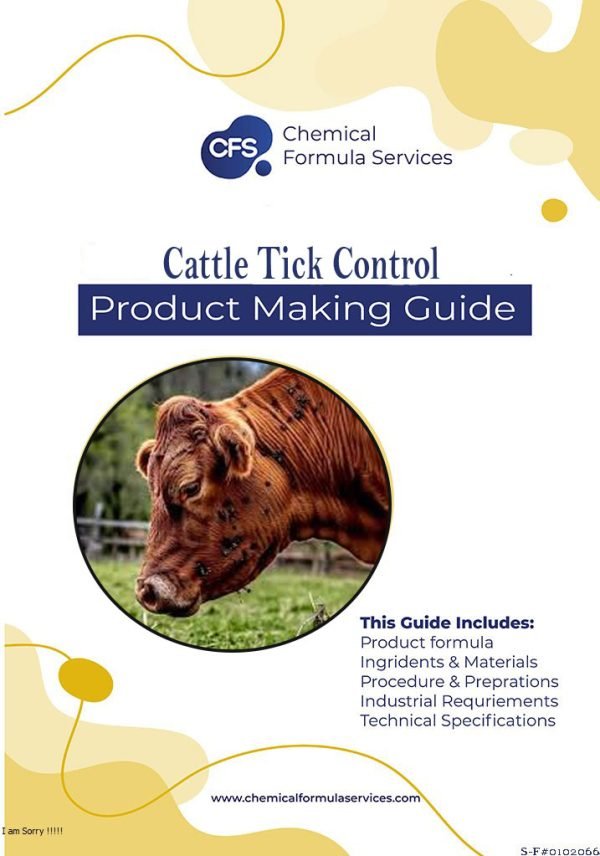
Ticks are blood-feeding parasites that attach to cattle on the ears, neck, dewlap, udder, groin, tail head, inner thighs and under the tail. A heavy infestation drains blood, causes anaemia, lowers weight gain and milk production, damages hides and udders and creates open wounds that become infected or fly-struck. More seriously, ticks carry diseases such as babesiosis (tick fever), anaplasmosis, theileriosis (including East Coast fever) and heartwater, which can kill animals or leave survivors weakened. In tropical and subtropical regions, tick control is a basic part of cattle management, and farmers use dips, sprays, pour-ons, injectables, ear tags and localised treatments such as tick grease.
What tick grease is and when it is used
Tick grease is a thick, semi-solid ointment containing a tick-killing or repelling active ingredient dissolved or suspended in a greasy base. A farmer or herdsman applies it by hand, brush or applicator to the places where ticks like to attach, particularly the ears, around the horns, tail switch, udder and teats, between the hind legs and around hooves and wounds. The grease sticks, resists rain and sweat, and keeps releasing active ingredient over days, killing ticks that attach and sometimes repelling them. It is especially valuable where full-body spraying or dipping is impractical, for treating individual animals, heavily infested spots or sensitive areas, for calves, for dairy cows where certain sprays are inappropriate, and as a supplement to routine control.
Components of a tick grease
- Grease base: petroleum jelly (petrolatum), lanolin, paraffin wax, vegetable oils, animal fats or blends, which form a smooth, water-resistant, sticky film. The base must stay semi-solid in hot climates and soft enough to apply in cooler weather.
- Acaricide (active ingredient): a registered tick-killing compound approved for veterinary use on cattle, for example synthetic pyrethroids, organophosphate or formamidine acaricides, depending on local registration and resistance patterns. Active ingredients and concentrations must follow the registered, approved formula and label of the market concerned.
- Synergists and carriers: certain additives that increase acaricide activity or help it spread through the grease, within what regulators allow.
- Repellent and healing agents (optional): essential oils, sulphur or other mild ingredients that deter flies and soothe skin.
- Adhesion promoters: waxes or polymers to improve staying power.
- Colourants: a visible dye, so that treated sites can be seen.
- Antioxidants and preservatives: to prevent rancidity of fats and protect the active.
Integrated tick management: grease is one tool among several
No single product controls ticks. Effective programmes combine chemical and non-chemical measures. Dipping or spraying the whole herd at regular intervals reduces the tick load on all animals. Pour-ons and injectables offer longer-acting systemic control for some parasites. Tick grease serves for targeted protection of the most vulnerable sites and for individual treatment. Pasture management, such as rotational grazing and resting paddocks, breaks the tick life cycle, because many species drop off cattle to lay eggs on the ground. Burning or slashing tall grass and brush, keeping animals out of heavily infested areas in peak season, and using tick-resistant breeds reduce pressure. Veterinary advice should tailor the programme to the local ticks and diseases. A producer who explains where tick grease fits, and does not claim it replaces all other measures, will earn respect from vets and farmers.
Resistance management and rotation
Overuse of a single acaricide class selects resistant ticks. Resistance to pyrethroids, organophosphates and amidines is documented in many countries. To slow resistance, rotate classes according to regional veterinary guidance, use the correct dose, avoid under-dosing, treat all animals in a group and avoid unnecessary applications. Monitoring tick survival after treatment helps spot early resistance. Suppliers can support farmers by offering products with different active ingredient classes, advising on rotation schedules and supporting resistance testing. This adds value and extends the life of your product line.
Grease bases for hot and cold climates
The consistency of the base must suit the climate. In hot tropical conditions, a softer petrolatum can run off the animal, so harder waxes and higher-melting petrolatum are blended in to hold the grease on the hide. In cooler highland conditions, a base that is too hard will not spread easily, so softer oils and fats are used. Seasonal variation in a single region may call for two grades. Test samples at the highest and lowest local temperatures, and watch for oil separation or cracking. A grease that is easy to apply but stays put in rain and sun is the target.
Packaging and applicator design
Tubs with wide mouths allow easy scooping, but hands get contaminated. Squeeze tubes and cartridges with applicator tips reduce direct contact. Include disposable gloves or a spatula in the pack, and print pictograms showing where to apply on the animal. Use child-resistant lids if required by regulation and clearly label as veterinary medicine or pesticide. Keep tubs sealed, store in a cool place away from sunlight, and provide an expiry date.
Working with veterinarians and cooperatives
Veterinarians and livestock cooperatives influence what farmers buy. Offer them technical sheets, trial data, training sessions and sample products for field trials. Gather feedback on efficacy, ease of use and cost per animal treated. Cooperatives can negotiate bulk purchases for members, creating stable demand. Establish clear communication on registration status, dosing and withdrawal times so that all users understand the product correctly.
What is inside the Tick Grease for Cattle Formula book
The book is a complete technical and practical guide for manufacturing high-performance tick grease products, designed for entrepreneurs, veterinary suppliers, agro-chemical companies and livestock-focused cooperatives that want to start or upgrade their tick-control product line. It outlines the threat ticks pose to cattle, the structure of tick grease, formulations built on registered active ingredients, manufacturing steps, quality control, packaging, use guidance and regulatory notes.
How tick grease is made
Production is a simple hot-melt blending process, but handling acaricides requires proper safety measures and a licensed facility where regulations require it.
Melting the base
Heat the grease base (petrolatum, wax, fat) in a jacketed kettle to a temperature that gives a clear melt, usually below about 80 degrees Celsius. Stir gently.
Adding the active
Cool the base to the temperature specified for the active ingredient (many are heat-sensitive) and add the acaricide, dissolved in a compatible solvent or carrier if necessary, under good mixing. Add any synergist, repellent and dye. Mix until uniform. Operators must wear gloves, respirators and protective clothing.
Cooling and homogenising
Cool slowly with stirring, passing through a mill or homogeniser if needed to prevent grainy structure and to give a smooth ointment.
Filling and labelling
Fill into tubs, tins or tubes, seal and label with the registered name, active ingredient and concentration, registration number, directions for use, withdrawal period (if any), safety warnings, batch number and expiry date.
How farmers apply it
Restrain the animal safely, wearing gloves. Apply a thin, even layer of grease to the target sites with a gloved hand or brush, ensuring the product does not get into eyes, nostrils or open wounds unless the label allows it. Treat all animals in the group to avoid reinfestation from untreated ones, and reapply at the label interval, commonly every few days to every week or two in heavy tick seasons. Combine with pasture management, dipping or spraying, rotation and good animal husbandry. Keep treated animals away from calves that may lick the grease unless the label allows, wash hands and tools after use, and store the product out of reach of children and away from feed and water.
Testing and quality control
- Active ingredient assay: verification by validated analytical methods that each batch contains the stated concentration.
- Appearance, colour and consistency: uniform, smooth, no oil separation.
- Penetration or consistency measurement: softness across temperature range.
- Dropping point or melting range: stability in hot weather.
- Adhesion and wash-off resistance: retention on hide under water spray.
- Efficacy: controlled trials on tick mortality or detachment, generally required by regulators.
- Skin tolerance: irritation tests.
- Storage stability: active content over shelf life at elevated temperature.
Troubleshooting
Grease is too hard or too soft
Wrong wax-to-jelly ratio. Adjust base components for climate.
Oil separates in storage
Unstable base or temperature cycling. Add suitable wax, cool slowly and homogenise.
Active crystals or uneven distribution
Poor dissolution or rapid cooling. Pre-dissolve the active and mix well.
Poor tick control in the field
Resistance to the active, under-dosing or infrequent application. Rotate classes of acaricide according to veterinary advice and follow label intervals.
Skin irritation on animals
Active level too high or sensitive animals. Review with a veterinarian and adjust.
Grease washes off in rain
Insufficient adhesion. Add water-resistant waxes and polymers.
Regulation, safety and responsible use
Products that kill ticks on animals are veterinary medicines or agricultural chemicals, and they are regulated almost everywhere. Manufacturers generally need product registration or authorisation, approved active ingredients at approved concentrations, good manufacturing practice, efficacy and safety data, approved labels and sometimes a veterinary or pesticide licence. Selling an unregistered acaricide can be illegal and dangerous. Always check with the relevant authority (agriculture, veterinary or pesticide regulator) before manufacturing or selling. Withdrawal periods for milk and meat after treatment must be stated and observed to protect consumers, and residue limits must be respected. Operators need training and protective equipment to handle acaricides safely. Acaricides are toxic to fish, bees and some wildlife, so avoid contaminating water and dispose of containers and wastes correctly. Tick resistance to acaricides is widespread, so integrated control and rotation are essential.
Business opportunity
Livestock keepers in tick-affected regions buy tick control products every season. Tick grease complements dips and sprays and sells through veterinary pharmacies, agro-dealers, cooperatives and farm stores. Companies can offer different pack sizes, such as 250 gram tubs for small farms and 1 and 5 kilogram tubs for ranches, along with applicators and gloves. Herbal or low-toxicity repellent greases, where approved, attract farmers who want alternative products, though their efficacy should be proven. Technical support, training for farmers and cooperation with veterinary services build credibility. Add other livestock products such as fly repellents, wound sprays and mineral supplements.
Related CFS guides help you build a livestock-care range. Browse the Poultry Veterinary Livestock category, and see Dairy Cow Health & Performance Formulation, Livestock Mineral Bolus & Controlled Release Systems Handbook, , White Grease Lubricant Formula, Mosquito Repellent Sticks Formula and Liquid NPK Fertilizers Formulation.
Getting started
Start by contacting your veterinary or agricultural regulator to learn the registration pathway and approved active ingredients. Partner with a licensed laboratory or manufacturer if needed. Develop a stable grease base, add the registered acaricide in a pilot batch, and run efficacy trials with a veterinarian. Prepare compliant labels and training materials, and launch in a limited area with cooperative support, monitoring results and resistance.
How to get the best results from this guide
Treat the guide as a tested starting point rather than a finished factory. Begin with a small trial batch in the laboratory or on a bench, using the exact raw materials you plan to buy, and record every weight, temperature, mixing time and observation. Compare the result with the quality checks in the guide, change only one thing at a time, and keep a note of what each change did. Once a small batch is consistently good, repeat it several times, then scale up in stages, because mixing, heating and cooling behave differently in larger vessels. Keep retained samples of every batch, write simple standard operating procedures for your team, and build relationships with two suppliers for each key raw material. Finally, check the labelling, safety and product rules in the country where you will sell, and ask a qualified person to review your process. This careful, documented approach is what turns a good formulation into a reliable product and a trusted brand.
Who should buy this guide?
The guide is written for practical readers. It suits manufacturers who want to add a new product to an existing plant, startups choosing their first product, private-label brands that need to understand what they are buying, technical staff who must set specifications and train operators, and consultants and students who want a structured, plain-language reference. It is less suitable for anyone looking for a quick shortcut or a guarantee, because every formulation still needs testing with your own materials, equipment and local rules. If you are unsure whether it matches your project, send a short question through the contact page before you order, and we will tell you honestly whether it fits.
What is inside the Tick Grease for Cattle Formula guide
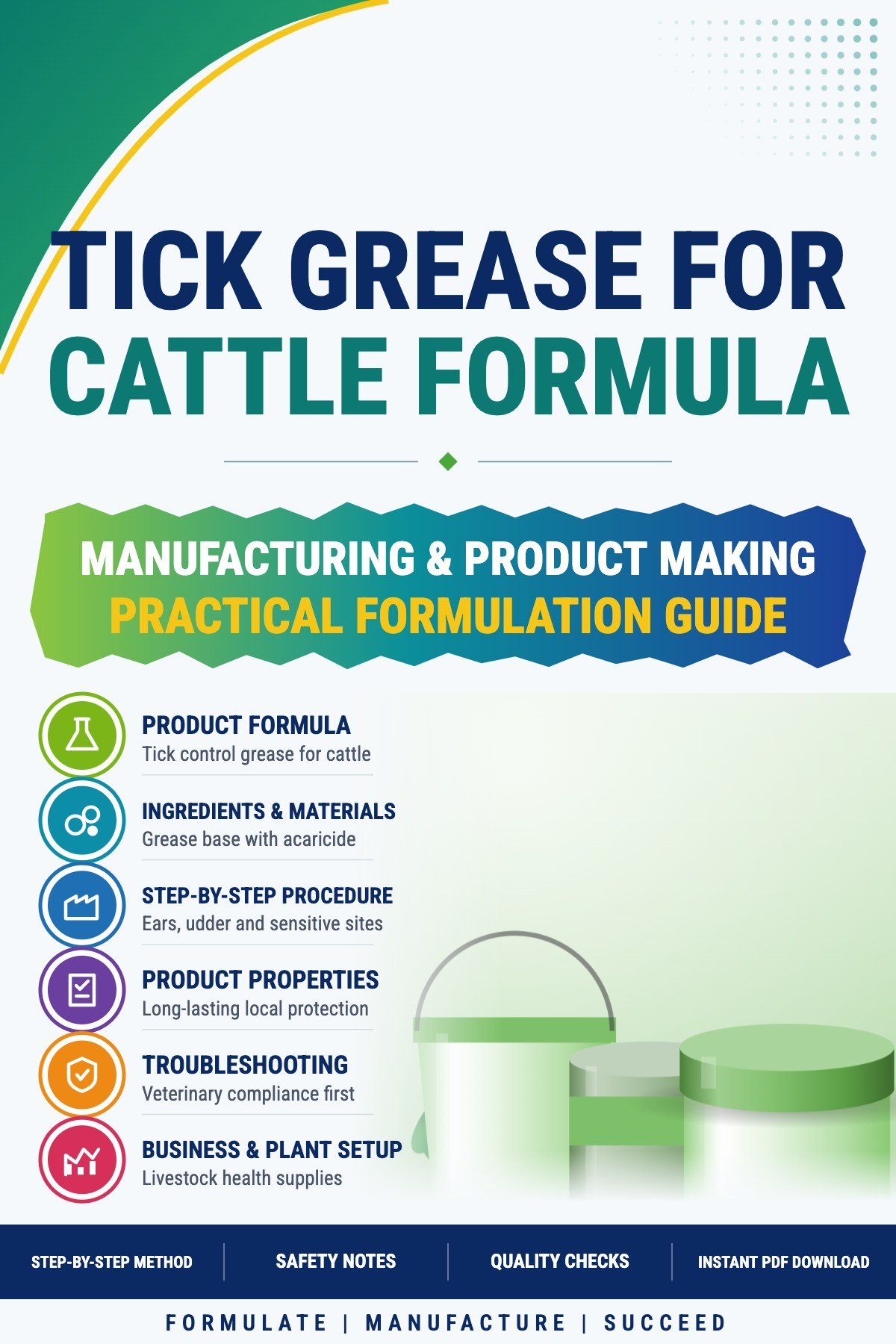
Every Product Making Guide in our shop follows the same structure so you know where to look. This guide includes the product formula, the ingredients and materials, the procedure and preparations, the industrial requirements and the technical specifications. In practice you receive:
- The formulation, written so you can follow it at the bench and scale it up.
- Ingredients and materials, with the job of each material and advice on grades and suppliers.
- The manufacturing procedure, including order of addition, mixing and preparations.
- Industrial requirements, covering equipment, space and packaging.
- Technical specifications, describing what a good finished product should look like and how it should behave.
- Troubleshooting for the faults that makers meet most often.
- Business guidance, to help you take the product from the bench to the market.
These Product Making Guides of chemical formulations and formulas are for manufacturers, startups and entrepreneurs. Every guide contains industrially tested, practical formulations. Anyone who buys a guide can make the product by following its step-by-step instructions. Raw materials vary between suppliers, so always confirm your results with a small trial batch before scaling up.
Who stands behind this guide?
Chemical Formulation Services is the trading name of CFS Formulation Services Ltd, registered in England and Wales under company number 16678503, with its office at Unit F, Winston Business Park, Churchill Way, Sheffield S35 2PS. The business was founded by George Enrick and publishes formulation manuals, technical guides and industry reports. You can check our details on the Companies House register, read about us, or contact us with any question before you order.
A written formulation cannot replace testing with your own raw materials, equipment and climate, and we say so plainly. What the guide does give you is a tested, structured starting point that can save you months of trial and error. Our terms and conditions explain what a purchase from us covers.
How to order
- Select Add to cart to keep browsing, or Buy Now to go straight to checkout.
- Pay with PayPal, Stripe, Xoom by PayPal, Payoneer, payment links for debit and credit cards, or Western Union, Ria and all money exchanges.
- If you pay through a money exchange, email your payment slip to Info@chemicalformulationservices.com. After confirmation, your instant download link is emailed to you.
- For online payments, the PDF is available as soon as the payment is confirmed.
All products are digital downloads and all payments are nonrefundable once the file is delivered, so please read the refund policy and the FAQs before you order. You can compare this guide with others in the formula shop or browse our industrial project reports.
Frequently asked questions about tick grease for cattle formula
What is the Tick Grease for Cattle Formula book?
It is a digital PDF Product Making Guide to manufacturing tick grease for cattle, covering bases, acaricide systems, process, testing and regulation.
Where is tick grease applied?
On ears, tail, udder, groin and other sites where ticks attach, according to the label.
Do I need registration?
Almost certainly yes. Acaricides are regulated veterinary or agricultural products, so check requirements first.
Why observe withdrawal periods?
To prevent drug or chemical residues in milk and meat.
Can ticks become resistant?
Yes. Rotate acaricide classes and follow veterinary guidance.
How do I receive the guide?
You receive an instant PDF download after payment is confirmed. For money exchanges, email your payment slip to Info@chemicalformulationservices.com and the link is emailed after we confirm it.
Is the payment refundable?
All payments are nonrefundable because the product is an instant digital download. See the refund policy for details.
Can you help with a custom formulation?
CFS Formulation Services Ltd offers formulation and product development consultancy. Send a short brief through the Contact page.
Last reviewed: November 2026. This page is general information about a digital product. It is not a safety data sheet or professional advice, and any formulation should be tested and reviewed by a qualified person before commercial use.