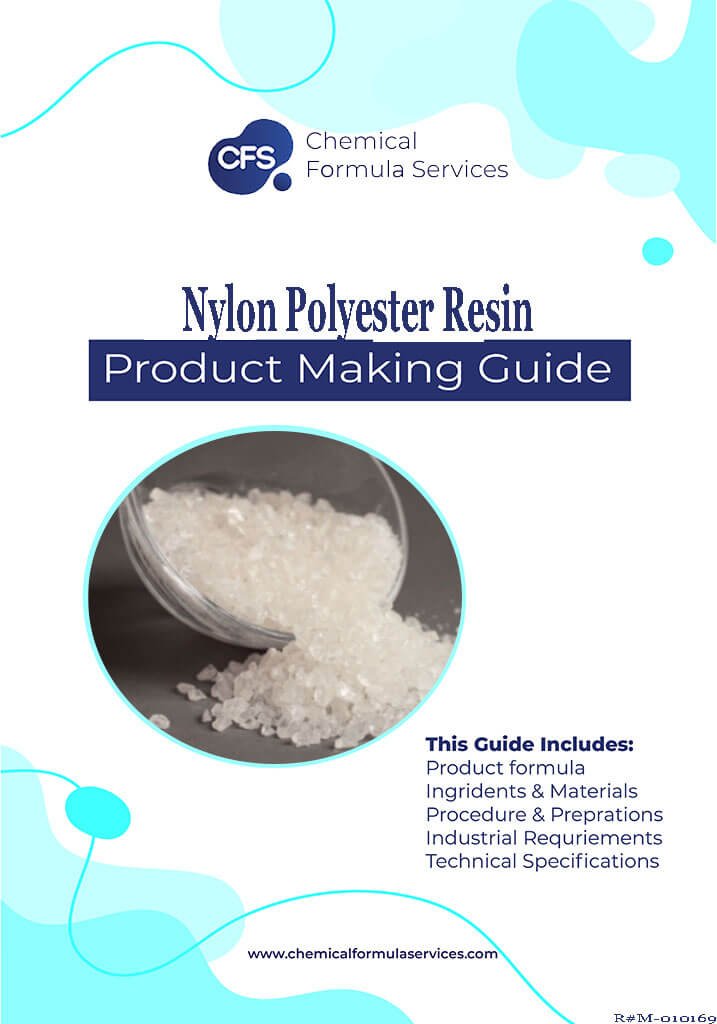
Nylon Polyester Resin Formulation
USD $75
PDF manual · Instant downloadPayment Methods
Refund Policy
Custom Formulation Services
Formulation Consultation
Contact Us
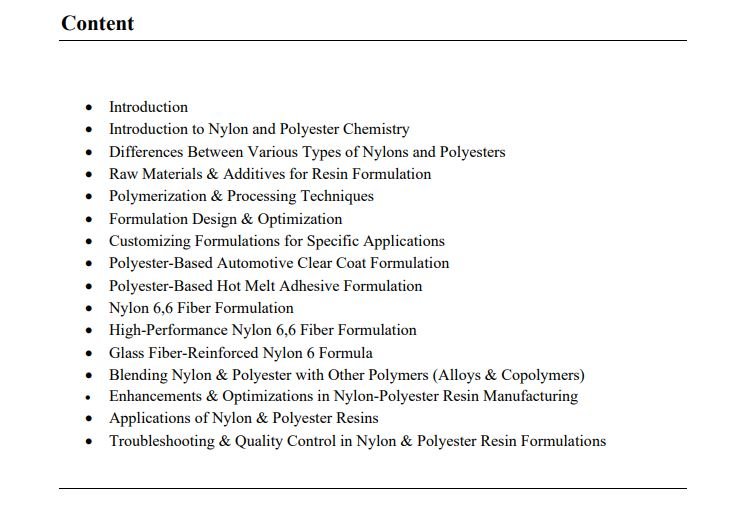
This book serves as a technical reference manual for chemists, material scientists, and engineers who are engaged in the development and optimization of Nylon Polyester Resin Formulation. It aims to bridge the gap between theory and practical formulation by covering a wide range of topics, including the selection of raw materials, polymerization techniques, modification strategies, and performance enhancement methods.
In an industry driven by innovation, formulators are constantly seeking ways to improve mechanical strength, thermal stability, solvent resistance, adhesion, and processability of these resins. The book provides step-by-step formulation methods, real-world case studies, and troubleshooting guidelines to assist professionals in optimizing resin formulations for diverse applications.
Nylon Resin
Nylon is a thermoplastic material that belongs to a class of polymers called polyamides. It was first introduced by DuPont in the 1930s and quickly gained popularity due to its exceptional strength, durability, and versatility. Nylon fibers are commonly used in textiles, such as clothing, carpeting, and industrial fabrics, as well as in applications like fishing lines, ropes, and parachutes.
It is also known as nylon plastic, is a form of nylon that has been processed into a thermoplastic resin. This resin retains many of the favorable properties of nylon fibers, including high strength, toughness, and resistance to abrasion. It is used in various industries for manufacturing products like automotive components, electrical connectors, sporting equipment, and consumer goods.
Polyester Resin
Polyester is another synthetic polymer widely used in textile and resin industries. It is a category of polymers known as polyesters, and the most common type used is polyethylene terephthalate (PET). Polyester fibers are known for their exceptional resistance to stretching, shrinking, and wrinkles. They are extensively used in clothing, home furnishings, carpets, and industrial applications.
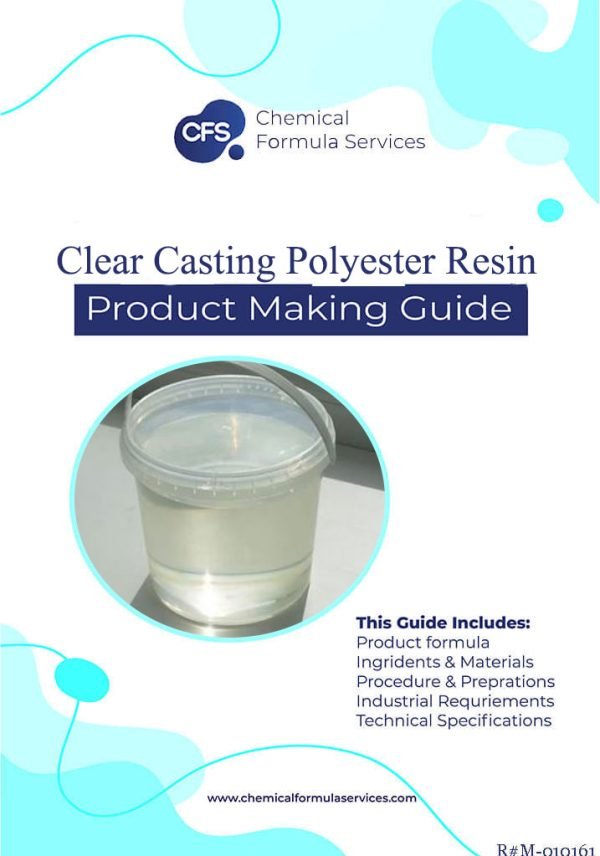
Polyester resin, also known as PET resin or polyester plastic, is a thermoplastic resin derived from polyester. It possesses good mechanical and thermal properties, making it suitable for a wide range of applications. Polyester resin is commonly used in the production of plastic bottles, packaging materials, films, fibers, and various molded products.
Both nylon and polyester resins have their unique properties and applications. Nylon resin offers excellent strength and toughness, making it suitable for applications requiring durability, while polyester resin provides good mechanical properties and is commonly used in packaging and textile industries.
Who Should Read This Nylon Polyester Resin Formulation Book?
This book is designed for:
Polymer chemists and materials scientists involved in resin development
Adhesives and coatings formulators seeking to optimize polyester-based formulations
Plastics engineers and manufacturers working with nylon and polyester processing
Students and researchers looking for in-depth knowledge on resin formulation
Industrial professionals in automotive, textiles, packaging, and construction sectors
Final Thoughts of Nylon Polyester Resin Formulation
As industries continue to demand high-performance and sustainable polymer solutions, the knowledge of nylon and polyester resin formulation becomes increasingly valuable. Whether you are a novice formulator or an experienced professional, this book will serve as an essential resource in your journey toward mastering resin formulation. Through detailed explanations, practical case studies, and advanced formulation techniques, this book provides the tools needed to innovate, enhance, and create superior nylon and polyester resin products for various industrial applications.
Let’s explore the fascinating world of nylon and polyester resins, where chemistry meets engineering to shape the future of material science.