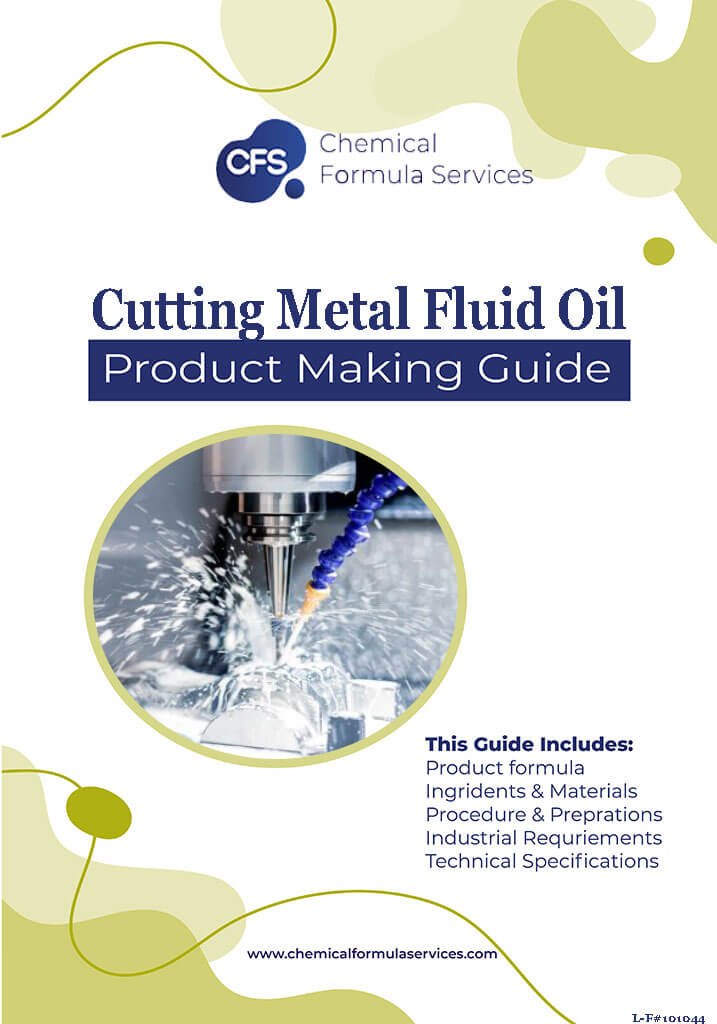
Cutting Metal Fluid oil Formulation
USD $85
PDF manual · Instant downloadPayment Methods
Refund Policy
Custom Formulation Services
Formulation Consultation
Contact Us
Cutting metals such as iron, aluminum, and various alloys, and nonmetals such as glass, ceramics, special ceramics, and reinforced plastics is a machining process that involves removing unnecessary parts from the workpiece. The specific cutting metal fluid oil formulation and ratios of these ingredients can vary widely based on the type of machining, material being worked on, and desired performance characteristics. Additionally, safety precautions, including proper ventilation and protective gear, should be followed in the making cutting oil formula, as it can generate aerosols and fumes that may be harmful if inhaled.
Cutting metal fluid oil ingredients
Base oil
The base oil is the primary component of cutting oil formulation and it provides lubrication and cooling. Mineral oils, synthetic oils, or a blend of both because it makes a base oil.
Additives
Various additives are included to enhance the performance of the cutting oil.
Extreme Pressure (EP) additives
These additives help prevent metal-to-metal contact and reduce friction during high-pressure machining operations.
Antioxidants
Antioxidants are added in cutting oil formulation to prevent the oil from degrading when exposed to heat and oxygen.
Anti-foaming agents
These additives help reduce foaming because it brings a problem in high-speed machining operations.
Rust inhibitors
Rust inhibitors protect the metal surfaces from corrosion by using the water or other contaminants.
Emulsifiers
Emulsifiers create stable oil-water emulsions in some cutting oil formulations because they mix both phases..
Biocides
The main function of Biocides is to prevent the growth of microorganisms in water-based cutting oils.
Coolant
In water-based cutting oils, water serves as the coolant. The ratio of water to oil can vary depending on the desired performance characteristics.
Dye
A dye may be added to provide color to the cutting oil, making it easier to see and monitor its distribution and performance.
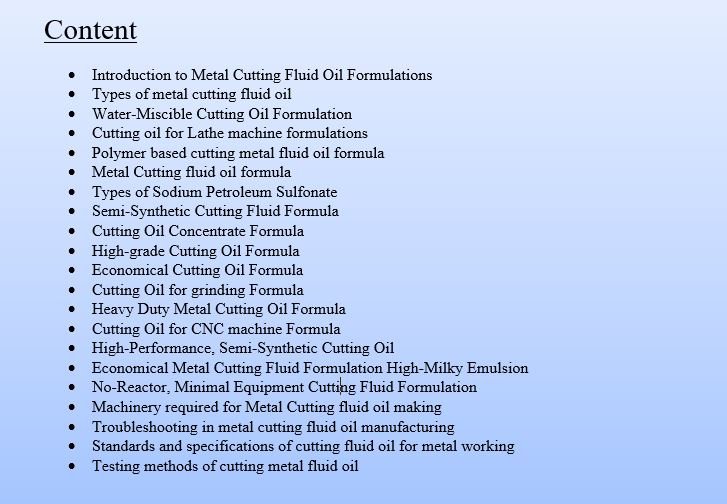
Troubleshooting in metal cutting fluid oil manufacturing
Troubleshooting in metal cutting fluid oil manufacturing involves identifying and addressing common issues that can arise during the formulation, mixing, and packaging processes. Here’s a guide to common problems and their potential solutions in our formula guide:
- Poor Emulsification
- Inconsistent Viscosity
- Odor Issues
- Foaming
- Stability Issues
- Poor Performance in Machining
- Contamination
- Regulatory Compliance Issues
- Color Variation
- Decreased Lubricating Properties
Cutting metal fluid oil making business
Desired shape, size or surface of the workpiece. In any cutting operation, a large amount of friction generates between a workpiece and a tool. Frictional heat burns the tool and roughens the machined surface of the workpiece, and thermal expansion reduces the shape accuracy because size of the workpiece and tool causing various problems.
To reduce the above problems, a cutting fluid or lubricant performs this task. A water-soluble cutting oil formulation characterized by excellent cooling and lubricating properties and no harmful effects on the environment.
There are various types of cutting fluids available, including oils, emulsions, and synthetics. Each type has its advantages and it selects for a specific metalworking application and requirements.
Let us start your cutting oil making business with our formula services.