
UV Invisible Ink Formulation
USD $75
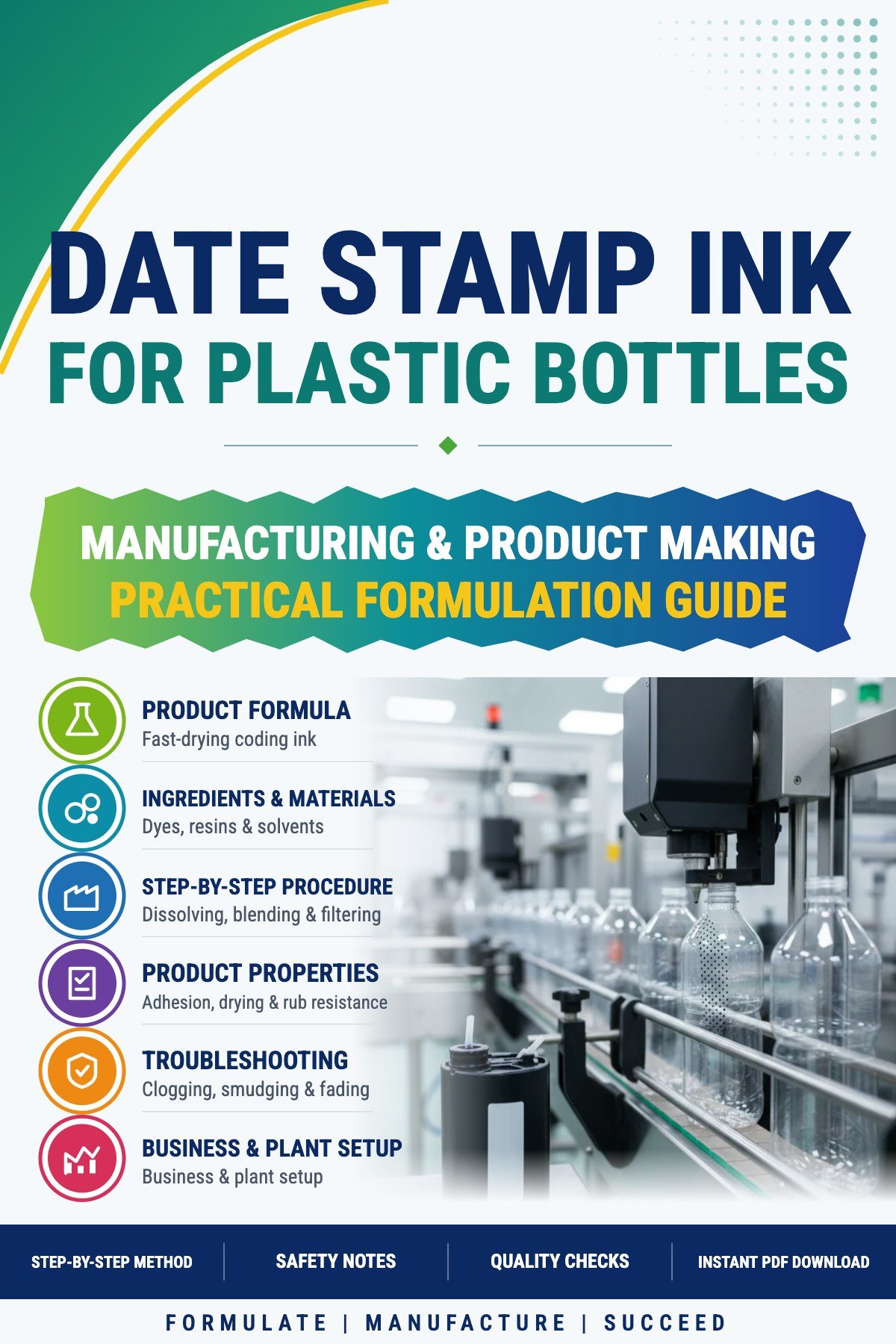
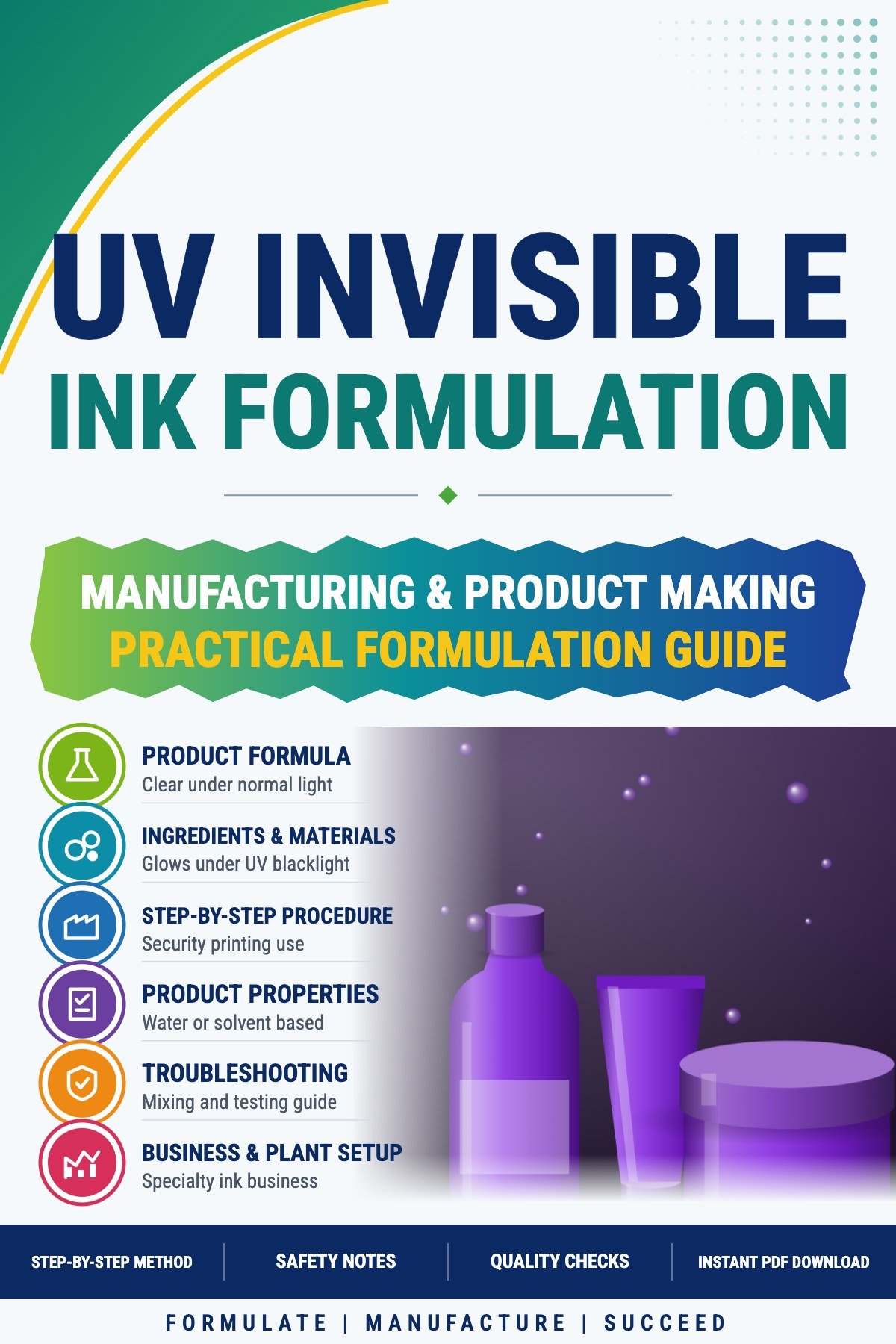
PDF manual · Instant downloadUV Invisible Ink Formulation: a PDF guide to inks that are clear in daylight and glow under UV blacklight, with ingredients, mixing, testing and troubleshooting.
Payment Methods
Refund Policy
Custom Formulation Services
Formulation Consultation
Contact Us
UV Invisible Ink Formulation is a practical PDF guide for specialty ink makers, security-printing businesses, startups and ink resellers who want to produce an ink that is clear or nearly invisible in normal light and reveals itself under ultraviolet (UV) blacklight. These inks are used for authentication marks, ticket and document security, brand protection, event stamps, product coding, children’s activity kits and creative projects. This page explains how a UV invisible ink formulation works, what goes into a UV invisible ink formula, how it is mixed, tested and packaged, and how to build a business around it.
This guide is published by Chemical Formulation Services, the formulation publishing and consultancy business of CFS Formulation Services Ltd in Sheffield, United Kingdom. It is written for people who want to understand the product from the raw material to the finished pack, and it keeps its claims practical rather than promotional.
At a glance
- Product: UV Invisible Ink Formulation, a digital PDF Product Making Guide.
- Also searched as: UV invisible ink formula, security ink, fluorescent invisible ink, blacklight ink, UV reactive ink.
- Behaviour: nearly invisible in daylight, glowing under UV blacklight.
- Used for: security marks, anti-counterfeiting, stamps, tickets, coding and novelty products.
- Who it is for: ink startups, security printers, stamp-ink makers and specialty resellers.
- Delivery: instant PDF download after payment is confirmed.
- Publisher: CFS Formulation Services Ltd, England and Wales company number 16678503.
How invisible UV ink works
Ordinary inks work by absorbing some wavelengths of visible light and reflecting others, which we see as colour. A UV invisible ink works differently. It contains a fluorescent material that absorbs ultraviolet light, which our eyes cannot see, and re-emits the energy as visible light, usually blue, green, red or yellow. Under normal lighting, the fluorescent material is colourless or only faintly tinted, so the mark is hidden. Under a UV lamp, usually a 365 nanometre long-wave blacklight, the mark glows brightly against its background. Because the effect needs the right pigment, the right substrate and the right lamp, it is hard to copy casually and is valued for authentication.
The task for the formulator is to deliver this fluorescent material in a printable or writable vehicle that adheres to the surface, dries properly, is stable in light and storage and does not show up in daylight. The guide covers choices from simple dye-based inks to rare-earth phosphor inks used in higher-security applications.
Fluorescent materials used
Organic fluorescent dyes
These are cost-effective and available in several glow colours. They dissolve in water, alcohol or solvents and give bright fluorescence on paper. Some are slightly visible in daylight and can fade under strong light over time, so they suit short-life and general-purpose marks.
Optical brighteners
Compounds used in laundry products and paper, also called fluorescent whitening agents, absorb UV and emit blue light. They are almost invisible on white paper and are often used for simple, low-cost invisible inks. The blue glow is distinct and easy to see under blacklight.
Inorganic and rare-earth phosphors
Phosphor pigments, such as europium and terbium doped compounds, give strong, stable and colourfast emission in red, green or blue. They are used in security inks for banknotes, passports and brand protection, and are more durable and harder to copy, but cost more and need particle-based ink systems and careful dispersion.
Ink vehicles and carriers
- Water-based inks: safe, low odour and suitable for stamp pads, pens and inkjet-type uses. They dry by absorption and evaporation.
- Alcohol and solvent-based inks: dry quickly and adhere to non-porous surfaces such as plastics, glass and metals.
- Resin-containing inks: add binder for durability and adhesion for printing and coding.
- Screen and flexo vehicles: for high-volume security printing, the fluorescent material is dispersed into a varnish.
Other ingredients
- Binder resin: acrylic or polyvinyl-based, to fix the mark to the surface.
- Humectants or glycols: keep stamp inks and pens from drying out.
- Surfactants and wetting agents: help the ink spread evenly and wet the substrate.
- Dispersants: for pigment-based phosphor inks.
- Preservatives: stop microbial growth in water-based inks.
- UV stabilisers and antioxidants: extend life of dye-based marks.
- pH buffers: some fluorescent dyes need a specific pH to glow brightly.
Security levels and layered authentication
Not all invisible inks protect equally. Overt features such as holograms are checked by eye, covert features such as UV inks are checked with a simple tool and forensic features need laboratory equipment. A basic dye or brightener ink is a low-level covert feature that a curious person with a blacklight can find, so it suits event stamps, tickets and simple authenticity checks. Phosphor inks with defined emission colours and decay times, inks that glow different colours under long-wave and short-wave light, and inks combined with fine printing patterns are much harder to copy. A good supplier explains these levels honestly and helps the customer choose, instead of promising that any ink is impossible to forge. Mixing a UV mark with another feature, such as a serial number or QR code, makes a more robust system.
Printing methods and compatibility
The same fluorescent material behaves differently in each printing process. Screen printing tolerates coarse phosphor particles and thick films. Flexographic and gravure printing need finer particles and lower viscosity. Inkjet printing demands very fine, well-filtered dispersions and strict control of particle size, otherwise nozzles block. Pad printing and stamping need tacky, slow-drying vehicles that transfer cleanly. Pens and markers need wick-compatible, non-clogging liquids. Always run a printing trial on the customer’s press and stock before bulk supply, since the substrate, coating and drying system change both the visibility in daylight and the glow under UV.
Storage, shelf life and handling of the finished ink
Dye-based UV inks are sensitive to light, so store them in opaque or amber containers, away from sunlight and fluorescent tubes that give off some UV. Keep the temperature moderate and the closure tight to avoid evaporation. Water-based inks need preservative, and unopened shelf life of one to two years is common if stored properly. Phosphor-pigment inks may settle, so tell users to shake or stir before use. Label each container with the batch number and date, and keep a retained sample from every batch to check against any customer complaint.
Cost and pricing
Fluorescent dyes and brighteners are used at low percentages, so the raw material cost per litre of simple inks is modest, and most of the price reflects packaging, labour and margin. Phosphor pigments are costly, so premium security inks command high prices per kilogram. Work out cost per hundred prints or per hundred stamped marks, since customers think in marks, not litres. Competitive pricing for kits, volume discounts for printers and a clear premium for certified or custom-colour inks keep the business healthy.
What is inside the UV Invisible Ink Formulation guide
The guide is a commercial-grade formula designed by Chemical Formulation Services (CFS) for startups, security-printing businesses and specialty ink resellers. It explains how the finished ink appears fully clear or nearly invisible under normal light and reveals its fluorescence when exposed to UV blacklight, and provides the formulation, mixing method, tests and troubleshooting needed to make it.
How to make the ink
The process is straightforward, but cleanliness and careful dosing are important because fluorescent materials are used at low levels.
Preparing the vehicle
Charge water or solvent to a clean vessel, add humectant and wetting agent, and mix until uniform. Use clean, filtered materials since particles can show up under UV.
Dissolving or dispersing the fluorescent material
Dissolve a dye or brightener completely, adding gently and checking that nothing is left on the stirrer. For phosphor pigments, wet and disperse them with a dispersant, using a high-speed disperser or bead mill until fully dispersed.
Adding binder and additives
Blend in binder resin, stabilisers, buffer and preservative. Adjust viscosity to suit the pen, stamp pad, brush, screen or inkjet system.
Filtering and filling
Filter through fine mesh to remove particles, then fill into bottles, pen reservoirs, stamp pads or cartridges. Dark or opaque packaging protects dye-based inks from light.
Testing the ink
- Daylight invisibility: check that the mark disappears on the target substrate, such as white paper, card or cloth.
- UV brightness: examine under 365 nm and, where relevant, 254 nm lamps, and compare with a reference.
- Colour of fluorescence: verify against target.
- Adhesion and rub resistance: test on paper, plastics and glass.
- Drying time: time to touch and handling.
- Light fastness: expose to light for fading.
- Stability: clarity and fluorescence after storage.
- Substrate effects: some papers contain brighteners that glow under UV and mask the mark, so test the real stock.
Troubleshooting
Mark visible in daylight
Dye level too high or dye is tinted. Reduce concentration or choose a clearer brightener.
Weak glow under UV
Too little fluorescent material, quenching by other ingredients or wrong pH. Increase active, remove quenching components and adjust pH.
Mark fades quickly
Photo-bleaching of dye. Add UV stabiliser, use packaging that blocks light and consider a phosphor for long life.
Paper glows everywhere
Optical brighteners in the paper. Use non-fluorescent stock or choose a different glow colour.
Blurring or feathering
Ink too thin or paper too absorbent. Raise viscosity and adjust surfactant.
Clogged pens or nozzles
Particles or drying. Improve filtration, use humectants and keep caps tight.
Safety and compliance
Fluorescent dyes and solvents can irritate eyes and skin. Wear gloves and eye protection when handling, and avoid inhaling solvents. Some rare-earth and pigment materials need dust control. Use UV lamps safely, since shortwave UV can burn skin and eyes, so do not stare into the lamp and use the long-wave type for general work. For children’s products, choose non-toxic, appropriately certified materials and test against toy safety rules. Never use invisible ink to counterfeit documents or deceive, and follow regulations covering security printing and currency.
Business opportunity
Demand comes from many directions: brand-protection teams marking packaging, event organisers stamping hands and tickets, schools and parents buying spy kits, art and craft shops, ID card and document printers, laboratories and manufacturing plants marking parts for inspection. Offering pens, stamp pads, refill bottles and bulk ink in several glow colours broadens the line. Selling a complete kit with a small UV torch is an attractive product for retail and online stores. For industrial customers, custom colours and particle sizes, data sheets and sample trials add value.
Related CFS guides help you expand an ink business. Browse the Ink Formulations category and see Bronze Gold Ink Formulation, Pigment-Based Sublimation Ink Formulation, Screen Printing Ink Formula, Watermark Printing Ink Formulations, and Photoluminescent Line Marking Paint Formula.
Getting started
Begin with a simple water-based brightener ink for stamps and pens. Test it on several papers under a good 365 nm lamp, compare it with commercial invisible pens and refine until it disappears in daylight and glows strongly. Prepare labelling, choose suitable packaging and add a UV torch to your first kit. Approach schools, event organisers and craft retailers, gather feedback, and develop higher-security phosphor inks as you build expertise.
How to get the best results from this guide
Treat the guide as a tested starting point rather than a finished factory. Begin with a small trial batch in the laboratory or on a bench, using the exact raw materials you plan to buy, and record every weight, temperature, mixing time and observation. Compare the result with the quality checks in the guide, change only one thing at a time, and keep a note of what each change did. Once a small batch is consistently good, repeat it several times, then scale up in stages, because mixing, heating and cooling behave differently in larger vessels. Keep retained samples of every batch, write simple standard operating procedures for your team, and build relationships with two suppliers for each key raw material. Finally, check the labelling, safety and product rules in the country where you will sell, and ask a qualified person to review your process. This careful, documented approach is what turns a good formulation into a reliable product and a trusted brand.
Who should buy this guide?
The guide is written for practical readers. It suits manufacturers who want to add a new product to an existing plant, startups choosing their first product, private-label brands that need to understand what they are buying, technical staff who must set specifications and train operators, and consultants and students who want a structured, plain-language reference. It is less suitable for anyone looking for a quick shortcut or a guarantee, because every formulation still needs testing with your own materials, equipment and local rules. If you are unsure whether it matches your project, send a short question through the contact page before you order, and we will tell you honestly whether it fits.
What is inside the UV Invisible Ink Formulation guide
Every Product Making Guide in our shop follows the same structure so you know where to look. This guide includes the product formula, the ingredients and materials, the procedure and preparations, the industrial requirements and the technical specifications. In practice you receive:
- The formulation, written so you can follow it at the bench and scale it up.
- Ingredients and materials, with the job of each material and advice on grades and suppliers.
- The manufacturing procedure, including order of addition, mixing and preparations.
- Industrial requirements, covering equipment, space and packaging.
- Technical specifications, describing what a good finished product should look like and how it should behave.
- Troubleshooting for the faults that makers meet most often.
- Business guidance, to help you take the product from the bench to the market.
These Product Making Guides of chemical formulations and formulas are for manufacturers, startups and entrepreneurs. Every guide contains industrially tested, practical formulations. Anyone who buys a guide can make the product by following its step-by-step instructions. Raw materials vary between suppliers, so always confirm your results with a small trial batch before scaling up.
Who stands behind this guide?
Chemical Formulation Services is the trading name of CFS Formulation Services Ltd, registered in England and Wales under company number 16678503, with its office at Unit F, Winston Business Park, Churchill Way, Sheffield S35 2PS. The business was founded by George Enrick and publishes formulation manuals, technical guides and industry reports. You can check our details on the Companies House register, read about us, or contact us with any question before you order.
A written formulation cannot replace testing with your own raw materials, equipment and climate, and we say so plainly. What the guide does give you is a tested, structured starting point that can save you months of trial and error. Our terms and conditions explain what a purchase from us covers.
How to order
- Select Add to cart to keep browsing, or Buy Now to go straight to checkout.
- Pay with PayPal, Stripe, Xoom by PayPal, Payoneer, payment links for debit and credit cards, or Western Union, Ria and all money exchanges.
- If you pay through a money exchange, email your payment slip to Info@chemicalformulationservices.com. After confirmation, your instant download link is emailed to you.
- For online payments, the PDF is available as soon as the payment is confirmed.
All products are digital downloads and all payments are nonrefundable once the file is delivered, so please read the refund policy and the FAQs before you order. You can compare this guide with others in the formula shop or browse our industrial project reports.
Frequently asked questions about uv invisible ink formulation
What is the UV Invisible Ink Formulation guide?
It is a digital PDF Product Making Guide to inks that are nearly invisible in normal light and fluoresce under UV blacklight, with ingredients, mixing, testing and troubleshooting.
How does UV invisible ink work?
A fluorescent material absorbs UV light and re-emits it as visible light, so the mark glows only under a UV lamp.
What lamp should I use?
A long-wave 365 nm blacklight is standard for most dye and phosphor inks.
Why does my paper glow under UV?
Many papers contain optical brighteners, so test on non-fluorescent stock.
Is the ink safe?
Use non-toxic, tested ingredients for children, and protect eyes and skin from strong UV lamps and solvents.
How do I receive the guide?
You receive an instant PDF download after payment is confirmed. For money exchanges, email your payment slip to Info@chemicalformulationservices.com and the link is emailed after we confirm it.
Is the payment refundable?
All payments are nonrefundable because the product is an instant digital download. See the refund policy for details.
Can you help with a custom formulation?
CFS Formulation Services Ltd offers formulation and product development consultancy. Send a short brief through the Contact page.
Last reviewed: November 2026. This page is general information about a digital product. It is not a safety data sheet or professional advice, and any formulation should be tested and reviewed by a qualified person before commercial use.