Ribbon Spray for Party Formulation
USD $75
PDF manual · Instant downloadRibbon Spray for Party Formulation: a PDF guide to aerosol party string, with resin and solvent systems, nozzle choice, filling, testing and safety.
Payment Methods
Refund Policy
Custom Formulation Services
Formulation Consultation
Contact Us
Ribbon Spray for Party Formulation is a practical PDF guide for novelty and party-supply manufacturers, aerosol fillers, startups and entrepreneurs who want to make ribbon spray, often called party string, crazy string or silly string. The world of party supplies is vibrant and full of opportunity, and this aerosol-based novelty has become a must-have item for birthdays, weddings, New Year’s Eve and celebrations of all kinds. A can of ribbon spray shoots out a stream of foamy liquid that solidifies in the air into long, colourful, stringy ribbons. This page explains how a ribbon spray for party formulation works, what goes into a ribbon spray for party formula, how it is made and filled, how to test it and what safety and legal restrictions apply.
This guide is published by Chemical Formulation Services, the formulation publishing and consultancy business of CFS Formulation Services Ltd in Sheffield, United Kingdom. It is written for people who want to understand the product from the raw material to the finished pack, and it keeps its claims practical rather than promotional.
At a glance
- Product: Ribbon Spray for Party Formulation, a digital PDF Product Making Guide.
- Also searched as: ribbon spray for party formula, party string formulation, silly string formula, crazy string aerosol, streamer spray.
- Pack: aerosol can with a special nozzle that forms strings.
- Key goals: strong, colourful strings, clean removal, safety and stable filling.
- Who it is for: party and novelty product makers, aerosol fillers and entrepreneurs.
- Delivery: instant PDF download after payment is confirmed.
- Publisher: CFS Formulation Services Ltd, England and Wales company number 16678503.
How ribbon spray works
A ribbon spray can holds a solution of polymer resin in a mixture of solvent and liquefied propellant under pressure. When the valve is pressed, the liquid passes through a specially designed nozzle with a narrow orifice and internal swirl or expansion chamber. As the contents leave the nozzle, the propellant boils off and the solvent evaporates quickly, causing the liquid to foam and the dissolved resin to solidify into a continuous strand, a bit like spinning a thread. The strand is soft, light, sticky enough to hold its shape and colourful from the dye. In a second or two, the foaming string lands as a tangled mass of ribbons that can be picked up and removed. The magic lies in the balance of resin concentration, solvent, propellant and nozzle geometry: too little resin gives sloppy foam, too much blocks the nozzle or makes brittle, stiff strings.
Core components
- Film-forming polymer: a thermoplastic resin such as an acrylic copolymer, vinyl resin or similar polymer that dissolves in the solvent system and solidifies on solvent loss. Resin choice sets strength, flexibility and tackiness.
- Plasticiser: adjusts flexibility and softness of the ribbon so that it does not shatter or stick excessively.
- Solvent system: traditionally included halogenated solvents, now largely replaced because of toxicity and regulation, by blends of hydrocarbons, alcohols, esters or ketones that dissolve the resin and evaporate at the right rate.
- Propellant: liquefied petroleum gas (butane/propane) or dimethyl ether that expels the liquid and drives foaming. Propellant ratio affects foam density and string thickness.
- Surfactants and foam stabilisers: help create the foam structure that solidifies into a string.
- Dyes and pigments: bright, skin- and surface-friendly colourants, selected for low staining on fabrics, skin and surfaces.
- Fragrance (optional): to mask solvent odour.
- Additives: anti-static agents, anti-blocking agents and stabilisers.
Foam, fibre and the physics behind the string
Ribbon spray is a small physics lesson in a can. As the pressurised liquid leaves the nozzle, the sudden drop in pressure makes dissolved propellant flash into vapour, creating a foam of tiny bubbles. At the same time, solvent evaporates from the thin walls between bubbles, and the resin that was dissolved in it thickens, then gels and finally solidifies. The foam stretches into a thread because the nozzle forces the flow into a narrow stream that is pulled lengthwise by its own momentum. If the resin hardens too quickly, the strand breaks into short, brittle bits. If it stays wet too long, the strand collapses into a sticky puddle. Formulators therefore tune evaporation rate through solvent blends, resin molecular weight and concentration, plasticiser level and propellant ratio, and test combinations at different temperatures, because a can used at a cold outdoor party behaves differently from one used in a warm hall.
Colours, effects and product ranges
Customers like variety, so successful brands offer cans in many colours: red, blue, yellow, green, pink, orange, purple, white and multicolour mixes. Special effects include neon or fluorescent colours that glow under blacklight, glitter or pearl effects, scented strings, and glow-in-the-dark versions. Each effect brings formulation challenges: glitter can block valves, pearl pigments need compatible dispersants, and fluorescent dyes may stain more. Keep dyes at the lowest level that gives clear colour, test staining on fabrics and surfaces, and give customers advice on cleaning, for example removing strings by hand or vacuum, then wiping stains with soapy water before they set. Seasonal products, such as holiday-themed cans for celebrations, help retailers and give you steady sales.
Compliance as a toy, novelty and aerosol product
Ribbon spray sits at the junction of several regulations: aerosols (pressure, flammability and labelling), consumer products (general safety) and sometimes toy rules if aimed at children. Gather the standards that apply in your market: tests for aerosol pressure and leaks, flammability classification, labelling of hazards, child-resistant requirements where relevant, ingredient restrictions and transport rules. Where products may contact skin or eyes, include cautions and first-aid advice. Keep a compliance file with test reports, safety data sheets and declarations from suppliers of valves, cans and chemicals. Trading standards authorities and large retailers may ask for these documents.
Packaging, display and branding
Party buyers shop by look. Bright can wraps, clear fun graphics and a simple message about use help shelf appeal. Multipacks and gift sets with several colours encourage bigger purchases. Cases of 12 or 24 cans with display trays fit retail shelves. Print the batch code, filling date and safety panel on every can, and include instructions on how to shake and spray, and how to clean up. Consider eco-friendly can materials and recyclable packaging as a selling point, since waste from party products is a public concern.
Selling through events, retailers and online
Seasonal peaks come at New Year, Halloween, school holidays and wedding season. Plan production ahead and agree delivery schedules with retailers. Offer promotional bundles to event organisers and party planners, and consider licensing for wholesale to party-supply chains. Online sellers should note that aerosols have shipping restrictions, so check carrier rules and use compliant packaging. Gather customer reviews and photos, and respond to safety or damage concerns quickly to protect brand reputation.
What is inside the Ribbon Spray for Party Formulation guide
The guide describes the vibrant, dynamic world of party supplies and the highly popular, eye-catching ribbon spray, also known as party string, crazy string or silly string, an aerosol-based novelty that has become a must-have for birthdays, weddings and New Year’s Eve. It then gives resin and solvent systems, example formulas, filling procedure, testing and safety guidance.
How the product is made
Aerosol manufacturing must be done by trained staff in properly equipped facilities, because the materials are flammable and pressurised. Many start-ups blend the concentrate and contract the filling.
Making the resin concentrate
In a closed, earthed, ventilated mixer, dissolve the resin in solvent, add plasticiser and surfactant and mix until clear. Add dye or pigment dispersion and mix to uniformity. Filter to remove particles that might block the valve.
Filling the cans
Dispense the concentrate into aerosol cans through a filler, place the special valve, crimp it, and add propellant through the valve or under the cup with a gas filler to the specified weight. Shake and check for leaks.
Testing and finishing
Test each can by hot-water bath for leaks, test spray on sample cans for string formation, dry the cans, cap, label and pack. Attach warnings and instructions.
Nozzle and valve selection
The nozzle (actuator) is as important as the formula. Ribbon spray actuators have a small orifice and a mechanical break-up or swirl chamber that gives the foaming action. Valve dimensions (stem orifice, housing hole, dip tube) control flow. Test several combinations with your formula. Use dip tubes of the right size, and check that valve gaskets resist the solvent mix. Consistent supply of specially designed actuators from a reliable supplier is vital, since a change of nozzle changes the string.
Testing and quality control
- String formation: length, thickness, continuity and strength of strings per second of spray.
- Spray range: distance the string travels.
- Discharge rate and net content: consistent weight emptying and total yield.
- Pressure at room temperature and at 50 degrees Celsius.
- Staining tests: on fabrics, skin, paper and painted surfaces, and ease of removal.
- Flammability tests: ignition distance and flame extension for flammable aerosols.
- Valve clogging and shelf life.
- Dye safety: compliance with colorant regulation.
Troubleshooting
Weak, short or slimy strings
Resin level too low, wrong propellant ratio or poor solvent balance. Increase resin, adjust propellant and test different solvents.
Spray dribbles or sputters
Blocked orifice or poor nozzle design. Filter the concentrate and check actuator and valve compatibility.
Strings are brittle or too sticky
Plasticiser level not right. Adjust plasticiser and resin ratio.
Colour stains fabrics or skin
Dye too strong or inappropriate. Use skin- and fabric-friendly dyes at lower levels.
Pressure falls before the can is empty
Leaks or too little propellant. Check crimp and fill weight.
Strong smell
Solvent odour. Use lower odour solvents and a pleasant fragrance.
Safety, regulation and responsible marketing
Ribbon spray cans are flammable aerosols. Production needs explosion-proof equipment, earthing, ventilation, fire protection and trained staff. Cans must pass pressure tests and carry hazard labelling. Warnings include: flammable; keep away from heat and open flames; do not use near eyes, face or mouth; do not spray at people’s faces; do not use indoors without ventilation; not for children under a stated age without supervision; do not puncture or burn. Many places restrict or ban use in some settings, such as on public monuments, historic buildings, bridges, certain events, and in some areas silly string has been prohibited because of cleaning and damage problems, so inform buyers. Some solvents formerly used have been banned or restricted (such as methylene chloride), so choose compliant materials, and check local aerosol, toy and cosmetic regulations. Colourants should be non-toxic and, if it might contact skin, comply with cosmetic colour regulations. Provide product safety data and comply with transport rules for aerosols.
Business opportunity
Party-supply retailers, supermarkets, toy shops, event planners and online sellers buy ribbon spray in cases. Sales peak at holidays, school events and celebrations. A manufacturer can offer assorted colour packs, glow or neon colours, themed cans for holidays, large “party size” cans and smaller pocket cans. Private label for retail chains and event brands is common. Safe, stain-friendly formulas with clear usage instructions differentiate quality brands. Bundle with party snow spray, confetti, balloons and streamers to create party sets.
Related CFS guides help you build a novelty and aerosol range. Browse the Cleaning Products and Industrial Adhesive Formulations categories, and see Party Snow Spray Formulation, Carburetor Cleaner Spray Formulation, Anti-Fog Spray Solution Formula, Firelighter Cubes Formulation, and Body & Face Paint Formula.
Getting started
Find a reputable contract aerosol filler and discuss valve, actuator and propellant options. Develop a test concentrate of resin, plasticiser, solvent and dye, fill sample cans and evaluate string quality and staining. Adjust the formula, run safety tests, prepare labels with all required warnings, and launch with a limited run for local party shops. Collect feedback and expand your colours and sizes.
How to get the best results from this guide
Treat the guide as a tested starting point rather than a finished factory. Begin with a small trial batch in the laboratory or on a bench, using the exact raw materials you plan to buy, and record every weight, temperature, mixing time and observation. Compare the result with the quality checks in the guide, change only one thing at a time, and keep a note of what each change did. Once a small batch is consistently good, repeat it several times, then scale up in stages, because mixing, heating and cooling behave differently in larger vessels. Keep retained samples of every batch, write simple standard operating procedures for your team, and build relationships with two suppliers for each key raw material. Finally, check the labelling, safety and product rules in the country where you will sell, and ask a qualified person to review your process. This careful, documented approach is what turns a good formulation into a reliable product and a trusted brand.
Who should buy this guide?
The guide is written for practical readers. It suits manufacturers who want to add a new product to an existing plant, startups choosing their first product, private-label brands that need to understand what they are buying, technical staff who must set specifications and train operators, and consultants and students who want a structured, plain-language reference. It is less suitable for anyone looking for a quick shortcut or a guarantee, because every formulation still needs testing with your own materials, equipment and local rules. If you are unsure whether it matches your project, send a short question through the contact page before you order, and we will tell you honestly whether it fits.
What is inside the Ribbon Spray for Party Formulation guide
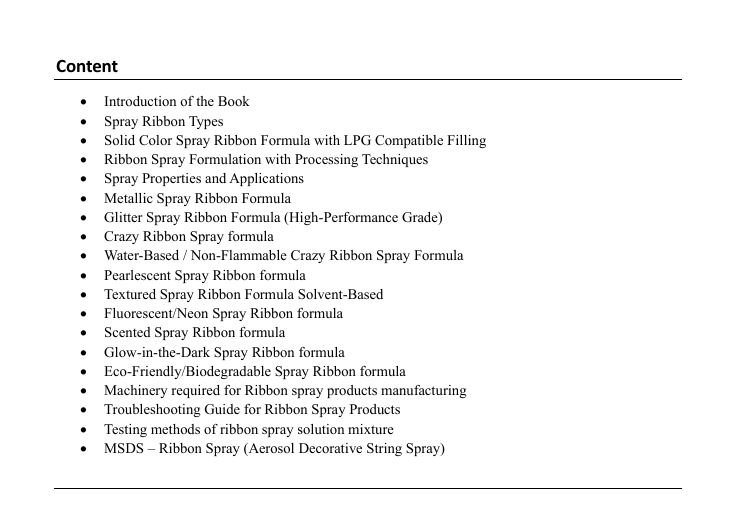
Every Product Making Guide in our shop follows the same structure so you know where to look. This guide includes the product formula, the ingredients and materials, the procedure and preparations, the industrial requirements and the technical specifications. In practice you receive:
- The formulation, written so you can follow it at the bench and scale it up.
- Ingredients and materials, with the job of each material and advice on grades and suppliers.
- The manufacturing procedure, including order of addition, mixing and preparations.
- Industrial requirements, covering equipment, space and packaging.
- Technical specifications, describing what a good finished product should look like and how it should behave.
- Troubleshooting for the faults that makers meet most often.
- Business guidance, to help you take the product from the bench to the market.
These Product Making Guides of chemical formulations and formulas are for manufacturers, startups and entrepreneurs. Every guide contains industrially tested, practical formulations. Anyone who buys a guide can make the product by following its step-by-step instructions. Raw materials vary between suppliers, so always confirm your results with a small trial batch before scaling up.
Who stands behind this guide?
Chemical Formulation Services is the trading name of CFS Formulation Services Ltd, registered in England and Wales under company number 16678503, with its office at Unit F, Winston Business Park, Churchill Way, Sheffield S35 2PS. The business was founded by George Enrick and publishes formulation manuals, technical guides and industry reports. You can check our details on the Companies House register, read about us, or contact us with any question before you order.
A written formulation cannot replace testing with your own raw materials, equipment and climate, and we say so plainly. What the guide does give you is a tested, structured starting point that can save you months of trial and error. Our terms and conditions explain what a purchase from us covers.
How to order
- Select Add to cart to keep browsing, or Buy Now to go straight to checkout.
- Pay with PayPal, Stripe, Xoom by PayPal, Payoneer, payment links for debit and credit cards, or Western Union, Ria and all money exchanges.
- If you pay through a money exchange, email your payment slip to Info@chemicalformulationservices.com. After confirmation, your instant download link is emailed to you.
- For online payments, the PDF is available as soon as the payment is confirmed.
All products are digital downloads and all payments are nonrefundable once the file is delivered, so please read the refund policy and the FAQs before you order. You can compare this guide with others in the formula shop or browse our industrial project reports.
Frequently asked questions about ribbon spray for party formulation
What is the Ribbon Spray for Party Formulation guide?
It is a digital PDF Product Making Guide to aerosol party string, covering resin and solvent systems, nozzle choice, filling, testing and safety.
How does ribbon spray form strings?
A resin solution with propellant foams as it leaves the nozzle, and the solvent evaporates so the resin sets into strands.
Is ribbon spray safe?
It is a flammable aerosol and must not be sprayed at faces or near flames, with all label warnings followed.
Does it stain?
Some dyes can stain fabrics and surfaces, so use friendly dyes and test removal.
Do I need an aerosol factory?
No. Many start-ups blend the concentrate and use a contract filler.
How do I receive the guide?
You receive an instant PDF download after payment is confirmed. For money exchanges, email your payment slip to Info@chemicalformulationservices.com and the link is emailed after we confirm it.
Is the payment refundable?
All payments are nonrefundable because the product is an instant digital download. See the refund policy for details.
Can you help with a custom formulation?
CFS Formulation Services Ltd offers formulation and product development consultancy. Send a short brief through the Contact page.
Last reviewed: November 2026. This page is general information about a digital product. It is not a safety data sheet or professional advice, and any formulation should be tested and reviewed by a qualified person before commercial use.