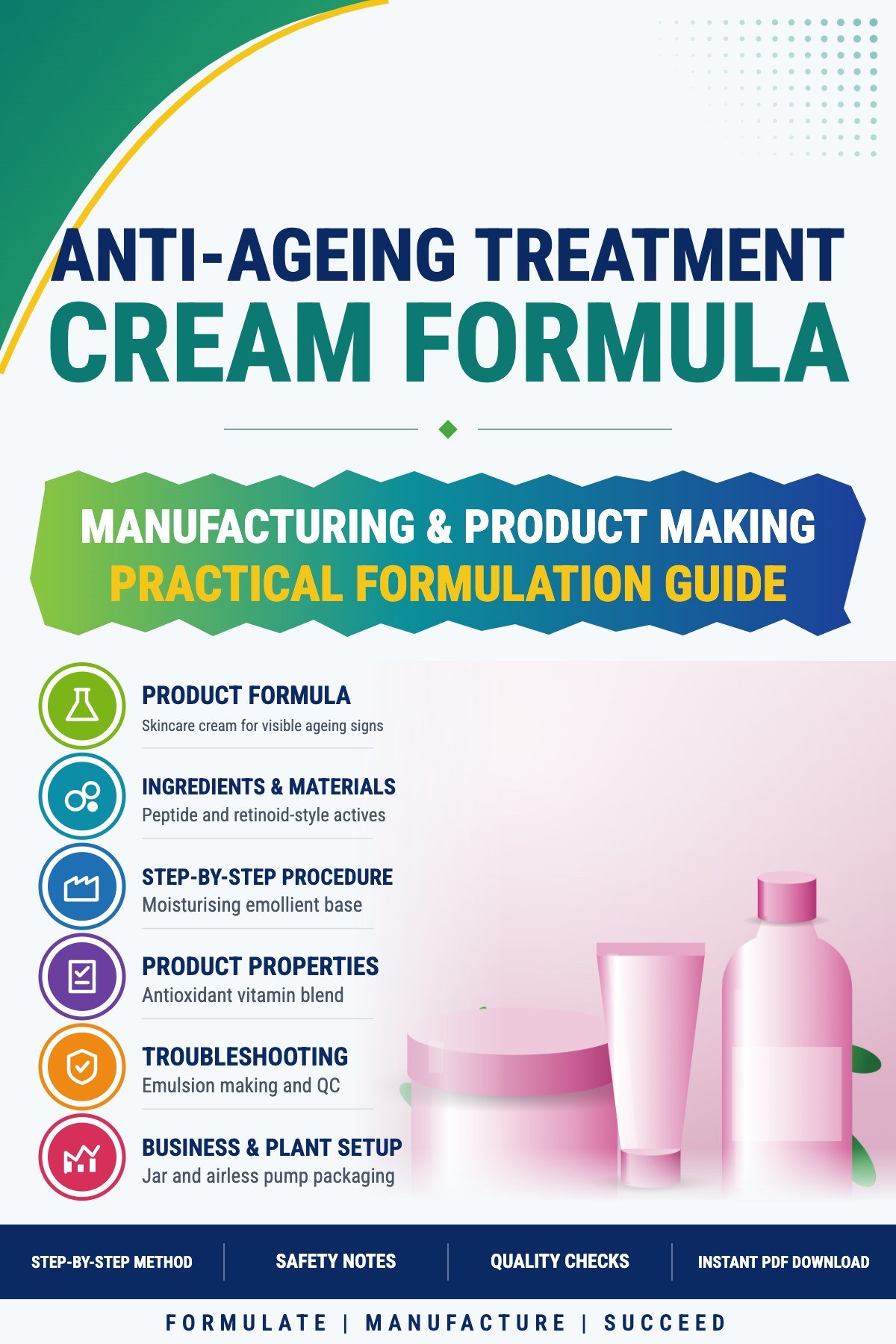

Anti-Ageing Treatment Cream Formula
USD $60
PDF manual · Instant downloadAnti-Ageing Treatment Cream Formula: a PDF guide to anti-ageing skincare creams, with emulsion base, actives, stability, making, testing, claims and packaging.
Payment Methods
Refund Policy
Custom Formulation Services
Formulation Consultation
Contact Us
Anti-Ageing Treatment Cream Formula describes a skincare product designed to address and minimise the visible signs of ageing on the skin, such as wrinkles, fine lines, loss of elasticity, uneven skin tone and dryness. Anti-ageing creams typically combine active ingredients that aim to improve the overall appearance of the skin. This practical PDF guide is for cosmetic manufacturers, private-label brands, startups and entrepreneurs. This page explains how an anti-ageing treatment cream formulation is built, which ingredients and emulsion systems are used, how to make and test it, and which regulatory points to respect.
This guide is published by Chemical Formulation Services, the formulation publishing and consultancy business of CFS Formulation Services Ltd in Sheffield, United Kingdom. It is written for people who want to understand the product from the raw material to the finished pack, and it keeps its claims practical rather than promotional.
At a glance
- Product: Anti-Ageing Treatment Cream Formula, a digital PDF Product Making Guide.
- Also searched as: anti-ageing treatment cream formulation, anti-wrinkle cream, night cream, firming face cream, skin renewal cream.
- Base: oil-in-water or water-in-oil emulsion with emollients and humectants.
- Key goals: hydration, skin feel, active stability, safe use and compliant claims.
- Who it is for: cosmetic makers, skincare startups, private-label brands and entrepreneurs.
- Delivery: instant PDF download after payment is confirmed.
- Publisher: CFS Formulation Services Ltd, England and Wales company number 16678503.
What happens to skin with age
With age, skin produces less collagen and elastin, cell renewal slows, the barrier weakens and natural moisturising factors decline. Sun exposure, pollution and lifestyle accelerate these changes, which appear as fine lines, wrinkles, dryness, dullness, uneven pigmentation and reduced firmness. A cosmetic cream cannot reverse ageing, but it can hydrate the skin, plump the surface, support the barrier, protect against environmental stress and improve the look and feel, which is why the category is one of the largest in skincare.
Active ingredient families
Humectants and hydrators
Glycerin, hyaluronic acid (sodium hyaluronate), panthenol and urea draw and hold water in the upper skin layers, making skin look plumper and smoother in the short term.
Antioxidants
Vitamin E (tocopherol), vitamin C derivatives, ferulic acid, green tea and other botanical extracts help neutralise free radicals. Vitamin C in its pure form is unstable, so stabilised derivatives or special packaging are used.
Peptides
Short amino-acid chains marketed for supporting skin firmness and smoothness. Suppliers provide use levels and compatibility data.
Retinoid-type ingredients
Retinol and related compounds are widely used for smoothing the look of skin but can irritate and are regulated in many regions, with maximum concentration limits. They are light and oxygen-sensitive and need protective packaging.
Exfoliating acids
Alpha hydroxy acids such as glycolic and lactic acid, and beta hydroxy acid, improve surface texture at limited levels and controlled pH, but raise sun sensitivity, so labelling must advise sun protection.
Niacinamide
A popular ingredient for tone, texture and barrier support, generally well tolerated and stable.
Ceramides and barrier lipids
Support the skin barrier and reduce dryness.
Sunscreen filters
Day creams often include UV filters, which then become regulated products with testing requirements.
The base cream
- Water phase: deionised water, glycerin, humectants and water-soluble actives.
- Oil phase: emollients such as caprylic triglyceride, squalane, shea butter, jojoba and silicones, plus fatty alcohols for body.
- Emulsifiers: non-ionic systems, glucoside or phosphate emulsifiers, or polymeric emulsifiers.
- Thickeners and stabilisers: carbomer or natural gums for cream body and suspension.
- Preservatives: broad-spectrum systems compatible with the formula.
- Chelating agent: to protect actives.
- pH adjusters and fragrance.
Day cream, night cream and eye cream: different jobs
An anti-ageing range works best when each product has a clear role. A day cream is light, absorbs quickly, sits well under makeup, and often carries antioxidants and, where regulated and tested, UV filters. A night cream is richer, with more emollients and barrier lipids, because skin loses water overnight and repairs itself more actively; this is where retinoid-type ingredients and exfoliating acids are most often used. An eye cream is formulated gently, with low irritation potential, fragrance-free or lightly scented, and a lighter emulsion to avoid milia. A neck and decolletage cream is richer and firmer in feel. The same base technology can serve all four with different oil levels, actives and packaging.
Texture, scent and the consumer experience
Customers judge an anti-ageing cream on first touch before they ever see a result. Spreadability, absorption speed, after-feel and scent decide repeat purchase. Run small sensory panels asking users to rate glide, richness, stickiness and finish, and adjust emollients and polymers accordingly. Keep fragrance soft and consistent, with a fragrance-free option for sensitive skin. A premium feel often comes from a good silicone or ester emollient blend and a gentle, non-tacky humectant system.
Building trust with ingredient transparency
Skincare buyers read labels. List ingredients using standard cosmetic names, explain what each hero ingredient is meant to do in plain language, and avoid exaggerated promises. Share the testing you have actually done, such as stability, dermatological patch testing or consumer perception studies, and be honest about the time needed to notice changes. Honesty, consistent quality and responsive customer service build a brand far more reliably than dramatic claims.
What is inside the Anti-Ageing Treatment Cream Formula guide
The guide defines the anti-ageing treatment cream as a skincare product designed to address and minimise the visible signs of ageing, including wrinkles, fine lines, loss of elasticity, uneven skin tone and dryness, typically containing various active ingredients that aim to rejuvenate and improve the overall appearance of the skin. It supplies ingredient lists, base recipes, step-by-step manufacturing, stability and safety checks.
Manufacturing process
Step 1: Phase preparation
Weigh the water phase, including glycerin and chelating agent, and the oil phase, including emollients, fatty alcohols and emulsifier. Heat both to about 70 to 75 degrees Celsius and hold briefly for hygiene.
Step 2: Emulsification
Add the oil phase to the water phase under high-shear mixing for several minutes, then continue with slower stirring while cooling.
Step 3: Cool-down additions
Below about 40 degrees Celsius, add heat-sensitive actives: peptides, vitamins, antioxidants, botanical extracts, preservatives and fragrance, each pre-dissolved or dispersed as per the supplier’s guidance.
Step 4: Adjust and finish
Adjust pH to the stable range for the actives, correct viscosity, and de-aerate if needed. Hold the batch for quality tests.
Step 5: Fill
Fill into jars, tubes or airless pumps in a clean room environment. Airless packaging protects oxygen-sensitive actives.
Stability of actives
Actives are valuable but fragile. Vitamin C derivatives oxidise; retinol degrades in light, heat and oxygen; peptides may hydrolyse at extreme pH; and some botanicals discolour. Protect them with antioxidants, chelating agents, correct pH, light-blocking packaging and cool storage. Run stability studies at room temperature, elevated temperature and in light for at least several months, and test active content at intervals if equipment permits. Choose packaging after stability results, not before.
Testing and quality control
- Appearance, colour, odour and texture.
- pH and viscosity.
- Emulsion stability: centrifuge, freeze-thaw, heat ageing.
- Microbial testing and preservative efficacy.
- Active level checks where analytical capacity exists.
- Skin compatibility: patch testing under qualified supervision.
- Packaging compatibility and leakage.
- Consumer sensory panels for feel and absorption.
Troubleshooting
Cream separates
Emulsifier level too low or mixing weak. Increase emulsifier and homogenise longer.
Cream turns yellow or brown
Oxidation of vitamin C, retinol or oils. Add antioxidants and use airless packaging.
Skin irritation
Active level or pH too aggressive. Lower the level, raise pH within the active range and add soothing ingredients.
Grainy texture
Waxes or fatty alcohols crystallised on cooling. Control cooling and homogenise.
Thin or runny
Thickener hydration issue. Re-evaluate polymer and neutralisation.
Pilling when applied under makeup
Too much film-forming polymer or silicone. Adjust the texture.
Regulation, claims and safety
Cosmetic claims must be truthful and supported. Wording such as “reduces the appearance of fine lines” is typical for cosmetics, whereas claims to change skin structure or treat disease can classify a product as a drug. Regulations on permitted ingredients, concentration limits, product information files, safety assessments, notification and labelling vary by country. Retinoids, AHAs and UV filters are examples of regulated ingredients. Labels should list ingredients, batch number, directions, precautions and storage conditions. Advise users to patch test, avoid eyes, use sun protection and seek medical advice if pregnant or if skin conditions are present. Follow good manufacturing practice for cosmetics.
Packaging and business opportunity
Glass or opaque plastic jars, airless pump bottles and tubes of 30 to 50 millilitres suit premium positioning. Skincare brands, spas, pharmacies, beauty clinics, salons and online sellers form the market. Private-label manufacturing for influencers and small brands is a major route, supported by clear ingredient storytelling, honest claims and attractive packaging. Day and night creams, eye creams and serums can be sold as a regimen, which raises order values and retention.
Extend your skincare range with the Cosmetics Industry, Personal Care Products, Soap Formula and Herbicide Formulations categories, and see , , , , and Sport Cream Formulation.
Getting started
Make a stable base cream first, then add one or two actives at moderate levels. Test stability, texture and compatibility, collect feedback from a small panel under proper safety supervision, and adjust. Prepare compliant labels and documents before selling, and begin with a limited launch.
How to get the best results from this guide
Treat the guide as a tested starting point rather than a finished factory. Begin with a small trial batch in the laboratory or on a bench, using the exact raw materials you plan to buy, and record every weight, temperature, mixing time and observation. Compare the result with the quality checks in the guide, change only one thing at a time, and keep a note of what each change did. Once a small batch is consistently good, repeat it several times, then scale up in stages, because mixing, heating and cooling behave differently in larger vessels. Keep retained samples of every batch, write simple standard operating procedures for your team, and build relationships with two suppliers for each key raw material. Finally, check the labelling, safety and product rules in the country where you will sell, and ask a qualified person to review your process. This careful, documented approach is what turns a good formulation into a reliable product and a trusted brand.
Who should buy this guide?
The guide is written for practical readers. It suits manufacturers who want to add a new product to an existing plant, startups choosing their first product, private-label brands that need to understand what they are buying, technical staff who must set specifications and train operators, and consultants and students who want a structured, plain-language reference. It is less suitable for anyone looking for a quick shortcut or a guarantee, because every formulation still needs testing with your own materials, equipment and local rules. If you are unsure whether it matches your project, send a short question through the contact page before you order, and we will tell you honestly whether it fits.
What is inside the Anti-Ageing Treatment Cream Formula guide
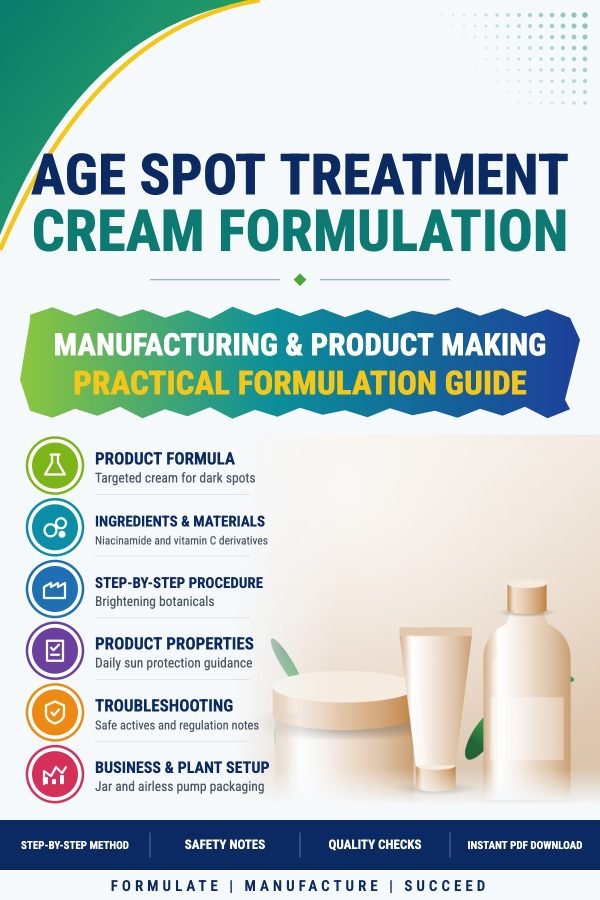
Every Product Making Guide in our shop follows the same structure so you know where to look. This guide includes the product formula, the ingredients and materials, the procedure and preparations, the industrial requirements and the technical specifications. In practice you receive:
- The formulation, written so you can follow it at the bench and scale it up.
- Ingredients and materials, with the job of each material and advice on grades and suppliers.
- The manufacturing procedure, including order of addition, mixing and preparations.
- Industrial requirements, covering equipment, space and packaging.
- Technical specifications, describing what a good finished product should look like and how it should behave.
- Troubleshooting for the faults that makers meet most often.
- Business guidance, to help you take the product from the bench to the market.
These Product Making Guides of chemical formulations and formulas are for manufacturers, startups and entrepreneurs. Every guide contains industrially tested, practical formulations. Anyone who buys a guide can make the product by following its step-by-step instructions. Raw materials vary between suppliers, so always confirm your results with a small trial batch before scaling up.
Who stands behind this guide?
Chemical Formulation Services is the trading name of CFS Formulation Services Ltd, registered in England and Wales under company number 16678503, with its office at Unit F, Winston Business Park, Churchill Way, Sheffield S35 2PS. The business was founded by George Enrick and publishes formulation manuals, technical guides and industry reports. You can check our details on the Companies House register, read about us, or contact us with any question before you order.
A written formulation cannot replace testing with your own raw materials, equipment and climate, and we say so plainly. What the guide does give you is a tested, structured starting point that can save you months of trial and error. Our terms and conditions explain what a purchase from us covers.
How to order
- Select Add to cart to keep browsing, or Buy Now to go straight to checkout.
- Pay with PayPal, Stripe, Xoom by PayPal, Payoneer, payment links for debit and credit cards, or Western Union, Ria and all money exchanges.
- If you pay through a money exchange, email your payment slip to Info@chemicalformulationservices.com. After confirmation, your instant download link is emailed to you.
- For online payments, the PDF is available as soon as the payment is confirmed.
All products are digital downloads and all payments are nonrefundable once the file is delivered, so please read the refund policy and the FAQs before you order. You can compare this guide with others in the formula shop or browse our industrial project reports.
Frequently asked questions about anti-ageing treatment cream formula
What is the Anti-Ageing Treatment Cream Formula guide?
It is a digital PDF Product Making Guide to anti-ageing skincare creams, covering base emulsions, actives, making, stability testing and packaging.
Can a cosmetic cream remove wrinkles?
No. It can hydrate and improve the appearance of skin, but claims must stay within cosmetic rules.
Why do actives need special packaging?
Vitamin C, retinol and peptides can degrade with light and oxygen, so airless or opaque packs protect them.
Are retinoids regulated?
Yes. Many regions limit retinoid concentrations and require specific labelling.
How should I test a new cream?
Run stability, microbial and compatibility tests, and use qualified patch testing before sale.
How do I receive the guide?
You receive an instant PDF download after payment is confirmed. For money exchanges, email your payment slip to Info@chemicalformulationservices.com and the link is emailed after we confirm it.
Is the payment refundable?
All payments are nonrefundable because the product is an instant digital download. See the refund policy for details.
Can you help with a custom formulation?
CFS Formulation Services Ltd offers formulation and product development consultancy. Send a short brief through the Contact page.
Last reviewed: November 2026. This page is general information about a digital product. It is not a safety data sheet or professional advice, and any formulation should be tested and reviewed by a qualified person before commercial use.