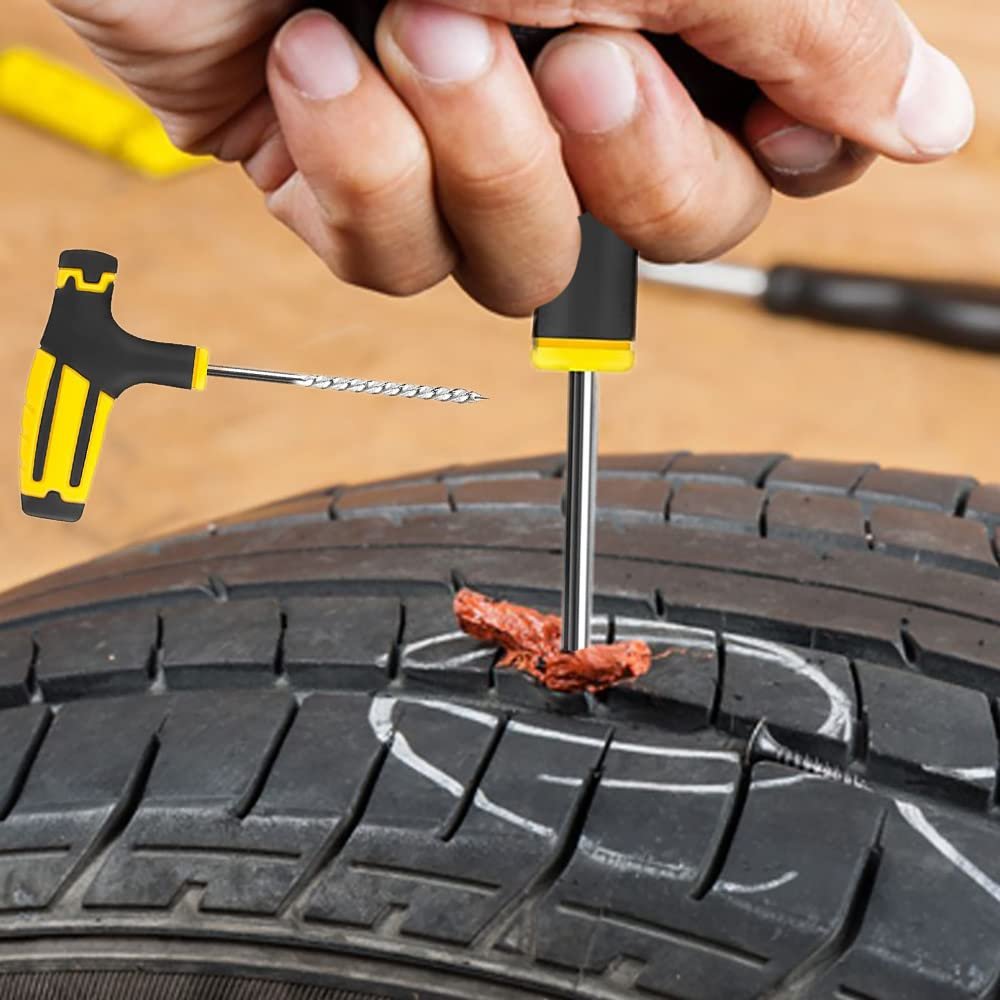
Tyre Adhesives Formulation
USD $70
PDF manual · Instant downloadPayment Methods
Refund Policy
Custom Formulation Services
Formulation Consultation
Contact Us
Tyre adhesives formulation , also known as tyre glues or tyre cements, are specialized adhesives used in the automotive industry to bond tyres to their rims. These adhesives play a critical role in ensuring that the tyre remains securely attached to the wheel, preventing any potential accidents or failures due to tyre detachment.
Types of tyre adhesives
- Cold Tyre Adhesives: Cold tyre adhesives are solvent-based adhesives that are applied to the tyre bead and the rim while the tyre is at ambient temperature. Once the adhesive is applied, the tyre is mounted on the rim, and the adhesive sets or cures at room temperature. These adhesives are commonly used in tire repair and replacement shops.
- Hot Tyre Adhesives: Hot tyre adhesives, as the name suggests, require heat for their application and curing process. They are typically used in large-scale tyre manufacturing facilities where tyres are produced in high volumes. The adhesive is applied to the tyre bead, and then the tyre is placed on the rim. Heat is applied, either through a curing press or autoclave, to facilitate the bonding process.
Tyre sealant ingredients
Tyre sealants are typically composed of a combination of chemicals and substances designed to repair and seal punctures in tires. The specific ingredients can vary among different brands and types of sealants, but here are some common components you might find in a typical tire sealant:
- Latex or Synthetic Polymer: This is the primary sealing agent in most tire sealants. It is a viscous liquid that can flow into and fill punctures when a tire is in motion, sealing them as it dries.
- Fillers: These are usually fine particles, such as fibers, rubber particles, or solid materials like mica, that help the sealant effectively plug larger punctures and reinforce the sealing process.
- Preservatives: Sealants may contain preservatives to extend their shelf life and prevent spoilage.
- Corrosion Inhibitors: These substances are added to protect the metal parts of the tire’s valve stem and rim from corrosion, which can occur if the sealant comes into contact with these parts.
- Thickeners: Some sealants include thickeners to give them a more gel-like consistency, making them easier to apply and reducing the likelihood of the sealant settling at the bottom of the tire.
- Surfactants: Surfactants are added to help disperse the latex or polymer evenly throughout the sealant mixture, ensuring it can coat the inside of the tire effectively.
- Water: Some sealants contain water as a carrier or diluent for the other ingredients. Water-based sealants are often easier to clean up and less likely to damage the tire’s inner lining.
- Colorants: To help identify a sealed puncture, some sealants are colored, making it easier to spot the area that required repair.
- Anti-freezing Agents: In regions with cold climates, antifreeze agents may be added to prevent the sealant from freezing inside the tire.
Tyre adhesives formulation guide
The adhesive properties of tyre adhesives are designed to withstand the stresses and forces . Many people has experienced by tyres during normal driving conditions, including the rotational forces, friction, and temperature fluctuations. Proper bonding of the tyre to the rim is essential for maintaining the integrity of the wheel assembly .
It’s crucial to use the appropriate type of adhesive recommended by the tyre manufacturer . It is better to ensure proper adhesion and compatibility with the tyre and rim materials. Using the wrong adhesive can lead to performance issues, safety risks, and premature tyre failure.
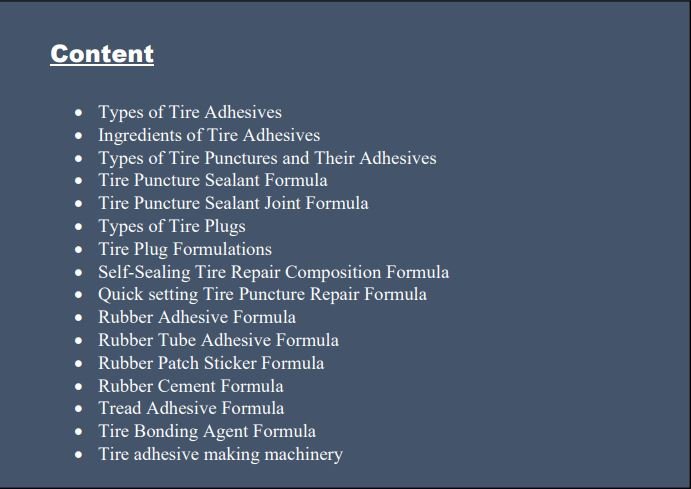
This guide have the following formulations:
- Tyre Adhesive Formulation
- Tyre Cement formula
- Rubber tube adhesive formula
- Tyre Sealant Composition Formula
- Tyre puncture sealant compositions
- Self-Sealing Tire Repair Composition Formula
- Tyre Puncture Sealant Formula
Tire adhesive making business has long term business nature in all over the world. let us try to seek and explore new technology in the tire industry by our formula guide.