Vinegar Making Formula
USD $60
PDF manual · Instant downloadPayment Methods
Refund Policy
Custom Formulation Services
Formulation Consultation
Contact Us
Vinegar production is a fermentation process that transforms alcoholic liquids, such as wine or cider, into vinegar through the action of bacteria. Vinegar has been produced and used for centuries in various culinary, household, and industrial applications.
Processing of vinegar making formula
- Raw Material Selection:
- Vinegar can be made from a variety of alcoholic liquids, including wine, cider, beer, fruit juices, or malt. The raw material selection depends on the desired flavor and characteristics of the vinegar.
- Fermentation:
- Alcoholic fermentation: The first step is to convert the sugars present in the chosen raw material into alcohol through fermentation. This can be achieved by introducing yeast into the liquid, which consumes the sugars and produces ethanol (alcohol) as a byproduct. The fermentation process typically takes place in a controlled environment with proper temperature and oxygen levels.
Acetic Acid Fermentation
- Acetification: The fermented alcoholic liquid is then exposed to acetic acid bacteria, most commonly of the genus Acetobacter. These bacteria convert the alcohol into acetic acid through a process known as acetification. Acetobacter bacteria oxidize the ethanol, producing acetic acid and other compounds that contribute to the flavor and aroma of vinegar.
- Oxygen Supply: Acetic acid fermentation requires the presence of oxygen. Traditionally, vinegar production involved an open-air fermentation process that allowed oxygen exposure. In modern production, various methods, such as aeration or the use of submerged fermentation systems, are employed to ensure sufficient oxygen supply to the bacteria.
- Aging and Maturation:
- After the acetic acid fermentation, the vinegar is typically aged for a certain period to develop its desired flavor profile. The aging process allows the vinegar to mellow and develop complex flavors. Different types of vinegar may have specific aging requirements.
- Filtration and Clarification:
- To remove any sediments, bacteria, or impurities, the vinegar is filtered and clarified. This helps improve the vinegar’s appearance and clarity.
- Bottling and Packaging:
- The vinegar is then bottled and packaged for distribution and sale. Proper labeling and packaging are essential to meet regulatory requirements and ensure product quality and safety.
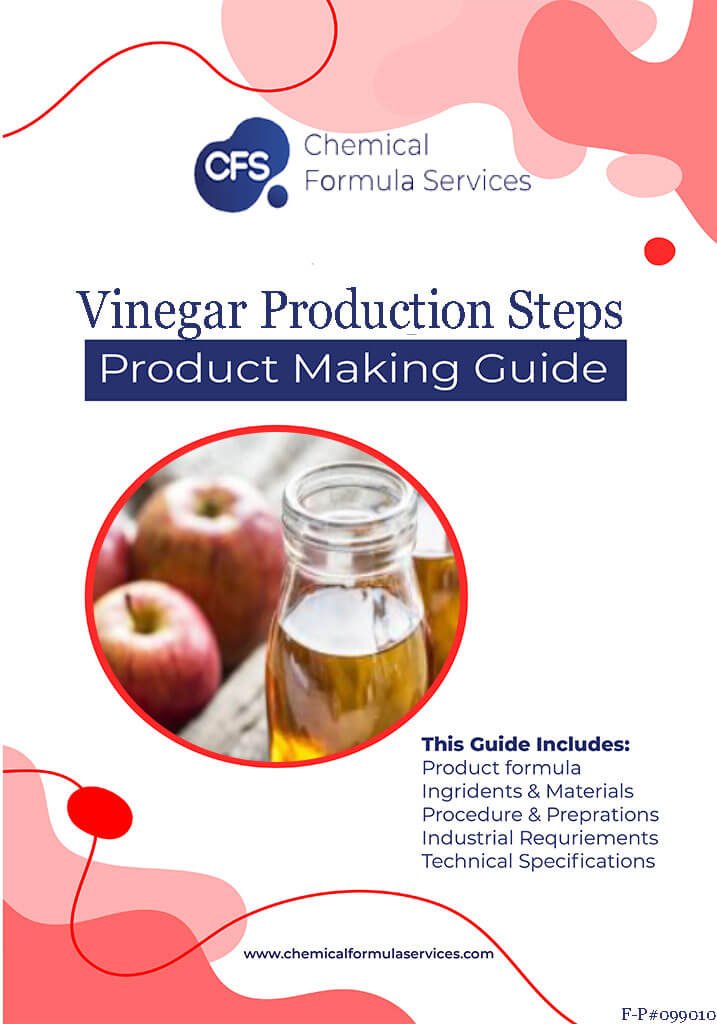
vinegar making formula guide
It’s important to note that the vinegar production process can vary depending on the type of vinegar being produced. For example, specific types of vinegar, such as balsamic vinegar, may undergo additional aging or flavoring steps to achieve their distinctive characteristics.
Vinegar production can be carried out on a small scale at home or in large-scale commercial vinegar production facilities. In commercial settings, quality control measures, sanitary conditions, and adherence to food safety regulations are crucial to ensure consistent and safe vinegar production