Car Wet Coat Formulation
USD $85
PDF manual · Instant downloadPayment Methods
Refund Policy
Custom Formulation Services
Formulation Consultation
Contact Us
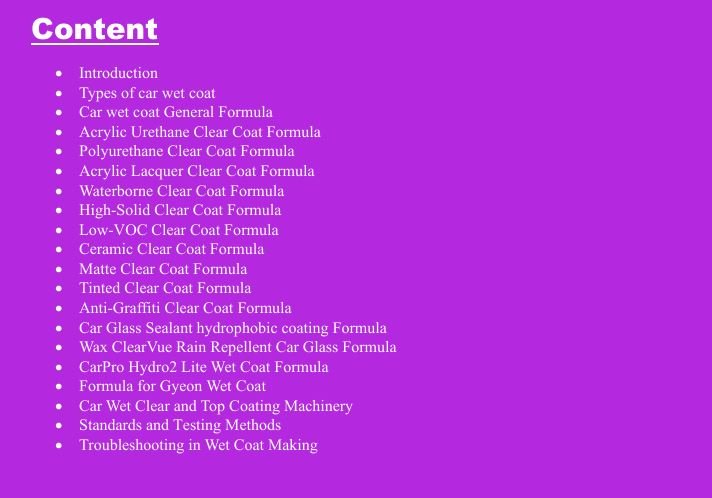
A “car wet coat” typically refers to a layer of clear coat or topcoat applied over the base coat (color layer) on a car during the painting process. The wet coat is essential for providing a glossy, protective finish that enhances the appearance and durability of the vehicle’s paint.
Key Aspects of Car Wet Coat
- Purpose:
- Protection: Protects the base coat from UV radiation, chemicals, and physical damage such as scratches and chips.
- Gloss: Provides a shiny, glossy finish that enhances the aesthetic appeal of the vehicle.
- Durability: Increases the longevity of the paint job by adding a resilient outer layer.
- Types:
- Acrylic Urethane Clear Coat: Known for its durability and high gloss.
- Polyurethane Clear Coat: Offers superior hardness and chemical resistance.
- Acrylic Lacquer Clear Coat: Provides a high-gloss finish but is less durable.
- Waterborne Clear Coat: Environmentally friendly with low VOC emissions.
- High-Solid Clear Coat: Contains a higher percentage of solids, resulting in fewer coats needed.
- Low-VOC Clear Coat: Designed to meet environmental regulations with reduced VOC emissions.
- Ceramic Clear Coat: Enhanced with ceramic particles for increased hardness and scratch resistance.
- Matte Clear Coat: Provides a non-glossy, flat finish.
- Tinted Clear Coat: Contains a slight tint to add depth and richness to the base color.
- Anti-Graffiti Clear Coat: Formulated to resist graffiti and make it easier to clean.
- Application:
- Surface Preparation: The surface must be clean, dry, and free of contaminants.
- Mixing: The clear coat is mixed with hardeners and solvents as specified by the manufacturer.
- Spraying: Applied using a spray gun in a controlled environment to ensure even coverage.
- Flash Time: Allowing time between coats for solvents to evaporate.
- Curing: Allowing the clear coat to harden and cure, which can take several hours to days depending on the formulation and conditions.
- Properties:
- UV Resistance: Protects the paint from fading and degradation due to ultraviolet light.
- Chemical Resistance: Resists damage from automotive fluids, road salts, and other chemicals.
- Abrasion Resistance: Provides a hard, durable surface that resists scratches and wear.
- Clarity: Ensures the underlying color remains vibrant and unchanged.
A Typical Wet Coat Process
- Prepare the surface: Clean and sand the car body to remove any imperfections and ensure proper adhesion.
- Apply base coat: Spray the colored base coat and allow it to flash (partially dry) between coats.
- Mix clear coat: Combine the clear coat resin with the appropriate hardeners and solvents.
- Spray clear coat: Apply the clear coat in thin, even layers, allowing flash time between each coat.
- Cure the clear coat: Allow the clear coat to fully cure according to the manufacturer’s instructions.
- Finish: Once cured, the surface can be polished to remove any minor imperfections and enhance the gloss.
Troubleshooting in Car wet coat making
Troubleshooting issues in car wet coat making (clear coats) involves identifying common problems and their solutions. Here are some typical issues and their corresponding troubleshooting tips:
- Fish Eyes
- Orange Peel
- Blushing
- Runs and Sags
- Pinholes
- Color Mismatch
- Dull Finish
- Bubbling
At CFS plateform , we specialize in providing cutting-edge formulas for the car wet coat product-making business. Our comprehensive formula services enable manufacturers to produce high-quality, durable, and glossy clear coats that meet industry standards. Utilizing advanced acrylic and polyurethane resins, our formulations are designed for superior UV resistance, chemical resilience, and scratch protection. By leveraging our expertise, businesses can create environmentally friendly, low-VOC options, including innovative variants like ceramic and anti-graffiti clear coats. With a commitment to quality and innovation, our services empower clients to deliver premium automotive finishes that stand out in the market.