Engine Gasket Sealant Formulation
USD $75
PDF manual · Instant downloadProduct Making Guide. These Product Making Guides of chemical formulations and formulas are for manufacturers, startups and entrepreneurs. Every guide contains industrially tested, practical formulations. Anyone who buys a guide can make the product by following its step-by-step instructions.
Payment Methods
Pay with PayPal, Stripe, Xoom by PayPal, Payoneer, payment links for debit and credit cards, or Western Union, Ria and all money exchanges. For payment links, Payoneer, Western Union, Ria or any other money exchange, email Info@chemicalformulationservices.com and we will send you the payment details for your country. After you pay, share your payment slip at the same address. Once we confirm it, your instant download link is emailed to you. Online payments unlock the download as soon as they are confirmed. More answers are on our FAQs page.
Refund Policy
Every manual is a digital download, so refunds are not available after a successful download or access. If you cannot open your file we will help you get access, and an accidental duplicate purchase can be reviewed if you contact us within 7 days. Read the full Refund Policy, Terms and Conditions and Privacy Policy.
Custom Formulation Services
Need a formula adapted to your raw materials, batch size or market? Send us a short brief and we will tell you what is possible. Use the Contact page or email Info@chemicalformulationservices.com.
Formulation Consultation
CFS Formulation Services Ltd offers technical consultancy on formulation and product development. Tell us what you plan to make and we will guide you on raw materials, equipment and next steps. Learn more about us or book a consultation.
Contact Us
Email Info@chemicalformulationservices.com or call +44 7365 764496. Our address is Unit F, Winston Business Park, Churchill Way, Sheffield S35 2PS, United Kingdom. You can also use the Contact page.
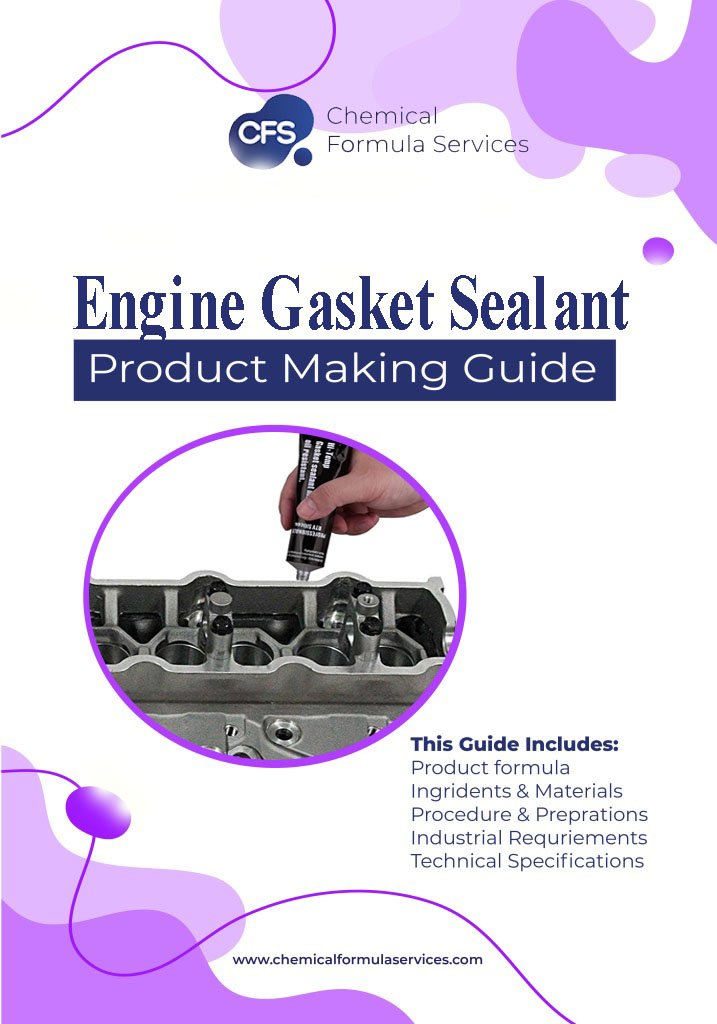
An engine gasket sealant is a chemical compound used to fill gaps and seal joints between engine components to prevent the leakage of fluids, gases, and to ensure that outside contaminants do not enter the engine. These sealants are crucial in automotive, marine, and industrial engines where they enhance the durability and integrity of gasket materials, and in some cases, are used in place of traditional gaskets. Here’s a closer look at what they do and their importance:
Functions of Engine Gasket Sealant
- Sealing: The primary function of an engine gasket sealant is to create a secure seal that can withstand high temperatures, pressures, and chemical exposure typically found within an engine environment. This seal helps to prevent coolant, oil, or exhaust gases from leaking between the different interconnected surfaces of engine parts.
- Enhancing Gasket Performance: Engine gasket sealants enhance the effectiveness of existing gasket materials by filling imperfections on sealing surfaces, which might otherwise lead to leaks.
- Corrosion Resistance: Many sealants provide a layer of protection against corrosion, helping to extend the life of the engine components.
- Adhesive Properties: Besides sealing, many gasket sealants also have adhesive properties, helping to hold gaskets in place during assembly.
Types of Engine Gasket Sealants
- RTV (Room Temperature Vulcanizing) Silicone Sealants:
- Usage: These are the most common type of sealants used in automotive applications due to their high temperature and chemical resistance. They cure at room temperature, forming a rubber-like seal.
- Anaerobic Sealants:
- Usage: Best suited for metal-to-metal joints, anaerobic sealants cure in the absence of air and are often used for flange sealants in rigid assemblies like gearbox casings.
- High-Tack Sealants:
- Usage: These are non-drying, remain tacky, and are used for their strong adhesive properties, suitable for irregular or porous surfaces.
- Form-a-Gasket Sealants:
- Usage: These are viscous sealants that can be spread onto surfaces or gaskets directly from a tube. They are used in various applications, including automotive flanges, pump housings, and gearboxes.
Application and Considerations
- Preparation: Surfaces must be clean and free of oil, grease, or previous sealant residues to ensure effective sealing.
- Application: Depending on the type, sealants are applied either directly to the surface or the gasket.
- Curing: Cure times vary by type of sealant and conditions such as temperature and humidity.
- Compatibility: It’s crucial to choose a sealant that is compatible with the materials of both the gasket and the adjoining surfaces, as well as the type of fluid that it will be exposed to within the engine.
Engine gasket sealants are an essential component of engine maintenance and repair, providing critical sealing properties that help extend the life of engine components and prevent costly leaks and damages.