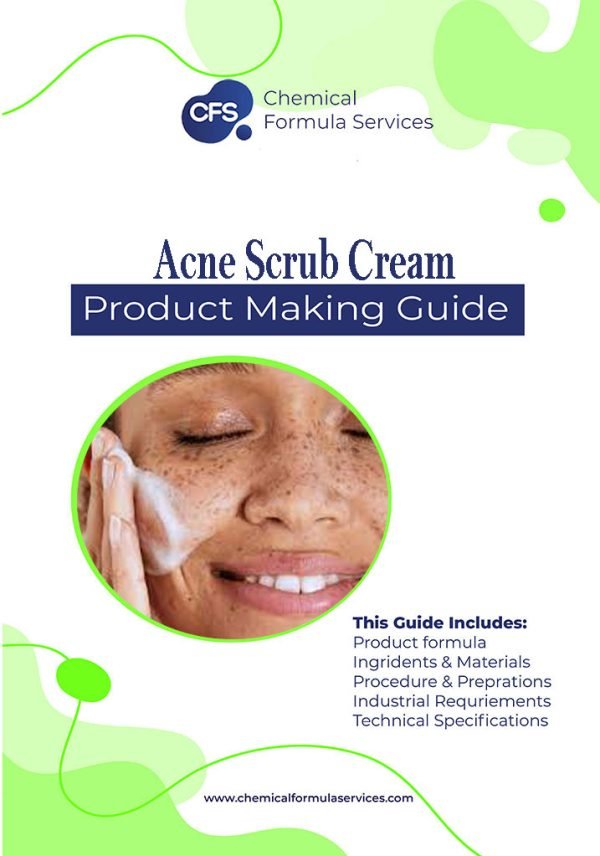
Acne Cream Formulation
USD $60
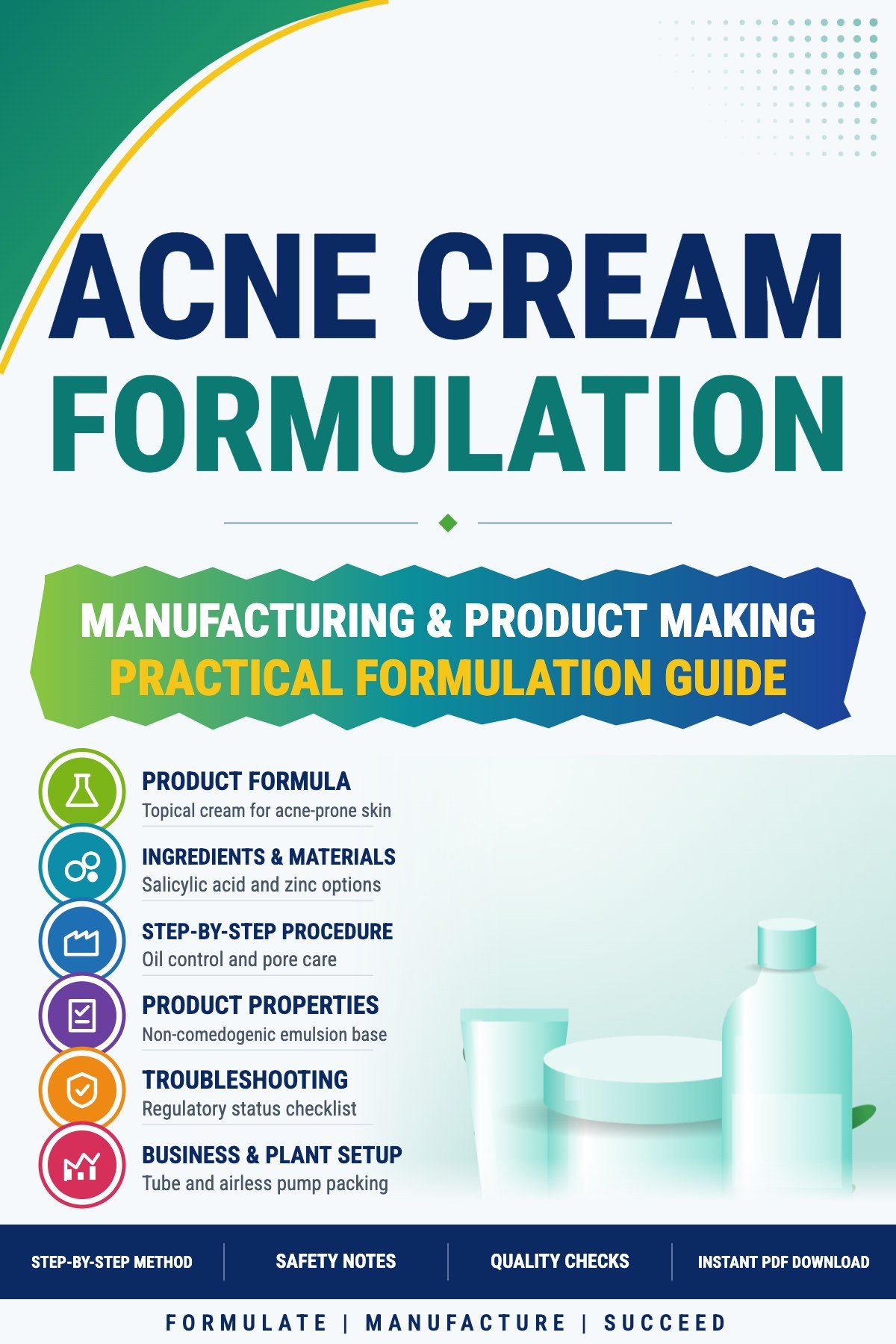
PDF manual · Instant downloadAcne Cream Formulation: a PDF guide to acne-focused skin creams, with active options, light bases, making steps, testing, regulatory notes and packaging.
Payment Methods
Refund Policy
Custom Formulation Services
Formulation Consultation
Contact Us
Acne Cream Formulation, also known as acne treatment, is a skincare product designed to help manage acne by addressing its main contributing factors: inflammation, excess oil, clogged pores and the healing of breakouts. Acne products come as creams, gels, lotions and ointments. This practical PDF guide is for skincare manufacturers, private-label brands, startups and entrepreneurs, and is written with regulation in mind, because acne products are often classed as medicines. This page explains how an acne cream formula is built, which actives and bases are used, how it is made and tested, and which regulatory points to check before you sell.
This guide is published by Chemical Formulation Services, the formulation publishing and consultancy business of CFS Formulation Services Ltd in Sheffield, United Kingdom. It is written for people who want to understand the product from the raw material to the finished pack, and it keeps its claims practical rather than promotional.
At a glance
- Product: Acne Cream Formulation, a digital PDF Product Making Guide.
- Also searched as: acne cream formula, acne treatment cream, spot treatment cream, salicylic acid cream, benzoyl peroxide cream.
- Base: light, non-comedogenic oil-in-water cream or gel-cream.
- Key goals: active stability, skin tolerance, oil control and regulatory compliance.
- Who it is for: dermo-cosmetic and OTC brand owners, contract manufacturers, pharmacies and entrepreneurs.
- Delivery: instant PDF download after payment is confirmed.
- Publisher: CFS Formulation Services Ltd, England and Wales company number 16678503.
Understanding acne
Acne develops in hair follicles when excess sebum, shed skin cells and bacteria, mainly Cutibacterium acnes, combine to cause blockages and inflammation. Hormones, genetics, stress, diet, cosmetics and some medicines can contribute. Lesions range from blackheads and whiteheads to red papules and deep cysts. Mild acne often responds to over-the-counter products, while moderate to severe acne needs medical treatment. A cream formulator must therefore be realistic: products can support clearer-looking skin and help manage mild acne, but should not promise cures, and users with serious or scarring acne should see a doctor or dermatologist.
Regulatory reality
In many countries, products that claim to treat or prevent acne are regulated as drugs or medicinal products rather than cosmetics. In the United States, certain acne ingredients such as salicylic acid and benzoyl peroxide fall under over-the-counter drug rules, with defined concentration ranges, labelling and manufacturing requirements. In the European Union and the United Kingdom, products sold with therapeutic acne claims may require medicinal authorisation, while cosmetic products can only claim to cleanse, reduce shine or help the appearance of blemishes. Prescription actives such as tretinoin, antibiotics and hormonal agents must never be put in unregistered consumer creams. Confirm the rules in your target market before choosing ingredients and claims.
Common active approaches
Salicylic acid (beta hydroxy acid)
An oil-soluble exfoliant that penetrates pores, loosens plugs and reduces inflammation. Used at low concentrations, typically around 0.5 to 2 percent in accordance with local regulations, and needing a slightly acidic pH to be effective.
Benzoyl peroxide
An antibacterial and keratolytic agent that reduces acne bacteria and helps clear pores. Effective but can cause dryness, irritation, bleaching of fabrics and hair, and requires stable formulation because it is oxidising. It is regulated as a drug in many markets.
Niacinamide, zinc and azelaic acid
Niacinamide helps reduce redness and oil appearance. Zinc salts can support oil control. Azelaic acid helps with blemishes and post-acne marks and is regulated differently by region.
Sulfur and resorcinol
Traditional keratolytic and antimicrobial agents used in some regions and subject to regulatory limits.
Botanical and soothing agents
Tea tree oil, witch hazel, green tea, centella, aloe and allantoin offer soothing or sebum-balancing claims, but may irritate or sensitise some users, so use carefully.
Base design
An acne cream base must be light, non-comedogenic and gentle. Use low levels of non-greasy emollients, humectants such as glycerin, oil-absorbing powders in mattifying versions, and mild emulsifier systems that do not clog pores. Avoid heavy waxes, high levels of coconut oil, isopropyl myristate and other known comedogenic ingredients. The pH should suit the active: salicylic acid works best at pH 3 to 4, while niacinamide prefers pH 5 to 7 and benzoyl peroxide needs special stabilisation. Packaging in tubes or airless pumps limits oxygen and contamination.
Gel, lotion and cleanser formats for acne-prone skin
Customers rarely use a cream alone. A gentle gel cleanser with a mild surfactant system helps remove excess oil without stripping the skin. A light lotion or gel moisturiser keeps skin comfortable while active treatments are used, which improves tolerance and adherence. A spot treatment gel with a clear base suits individual blemishes and can dry down quickly. A leave-on toner with low-level exfoliating acid suits oily zones. Because acne-prone skin can be dry or sensitive from treatment, many users need a barrier-supporting product with ceramides and glycerin. Presenting these as a coordinated routine, with clear order of use, gives better outcomes than selling a lone cream.
Avoiding comedogenic and irritating ingredients
Raw material choice matters as much as the active. Some emollients and oils have a higher tendency to block pores in susceptible people, including coconut oil, cocoa butter and certain fatty acid esters; others, such as squalane, caprylic triglyceride and many silicones, are generally better tolerated. Heavy fragrances, high levels of alcohol, harsh scrubs and strong essential oils can irritate and worsen inflammation. Keep ingredient lists short and clean, and supply suppliers’ comedogenicity data where available, remembering that no test predicts every person’s response.
Building trust with dermatologists and pharmacies
Acne products live or die on credibility. Pharmacists and dermatologists recommend products with clear labelling, consistent quality and honest limits. Provide them with safety information, ingredient rationales, stability data, and any clinical or in-use studies you have conducted. Support them with patient leaflets that explain realistic timelines, since improvement often takes six to twelve weeks, and when to seek medical help. A trustworthy, modest brand with transparent claims usually outlasts one that relies on dramatic marketing.
What is inside the Acne Cream Formulation guide
The guide describes acne cream formulation, also known as acne treatment or acne medication, as a skincare product designed to treat and manage acne by reducing inflammation, controlling excess oil, unclogging pores and promoting healing of breakouts, available as creams, gels, lotions and ointments. It supplies example bases, active options, processes, tests and regulatory notes.
Manufacturing process
Step 1: Prepare phases
Weigh the water phase and the oil phase separately. For salicylic acid, dissolve it in a suitable solvent or oil phase, such as propylene glycol, ethanol or esters, as it dissolves poorly in water. Heat both phases to about 70 to 75 degrees Celsius.
Step 2: Emulsify
Combine with high-shear mixing, then cool slowly with gentle stirring.
Step 3: Add heat-sensitive ingredients
Below 40 degrees Celsius, add niacinamide, extracts, preservatives and fragrance (preferably none for acne-prone skin). Adjust pH carefully to the active’s range.
Step 4: Dispersing benzoyl peroxide (if used)
Use specially stabilised benzoyl peroxide grades, dispersed carefully in water with protective colloids, without heat. Wear appropriate protective equipment, since benzoyl peroxide powders are oxidisers and can ignite when dry.
Step 5: Fill
Fill into clean tubes or airless pumps, avoiding contamination.
Testing and quality control
- Active content assay by validated methods.
- pH and viscosity.
- Stability studies: room temperature, elevated temperature, light.
- Microbial testing and preservative efficacy.
- Skin irritation and sensitisation assessment by qualified professionals.
- Non-comedogenicity evidence if claimed.
- Packaging compatibility including oxidising actives.
- Batch records and GMP compliance suited to drugs where required.
Troubleshooting
Skin dryness and peeling in users
Active level too high or lacking moisturisers. Reduce level and add humectants and soothing agents.
Salicylic acid crystals form
Solubility exceeded. Improve solvent system or lower the level.
Cream separates at low pH
Emulsifier unstable. Choose acid-tolerant emulsifier or polymer.
Benzoyl peroxide loses strength
Instability or high temperature. Use stabilised grade and cool storage.
Greasy feel
Oil phase heavy. Use lighter emollients and oil-absorbing powders.
Colour change
Oxidation or interaction with packaging. Check ingredients and use airless packs.
Safety and consumer guidance
Provide clear directions: wash and dry skin first, apply a thin layer to affected areas, start with once-daily use, avoid eyes, lips and broken skin, use sunscreen during the day because some actives increase sun sensitivity, and discontinue if severe irritation occurs. Warn that benzoyl peroxide can bleach fabrics. Pregnant or breastfeeding users and anyone using prescription acne medicines should consult a doctor. Encourage anyone with severe, painful or scarring acne to seek professional care. Avoid claims that the product cures acne or works for every person. Keep production clean and follow good manufacturing practice appropriate for cosmetics or drugs, whichever applies.
Packaging and business opportunity
Tubes and airless pumps of 15 to 50 millilitres suit spot treatments and full-face creams. Customers include teenagers and adults with mild acne, pharmacies, dermatology-recommended skincare ranges and online shoppers. Compose a simple regimen with a gentle cleanser, treatment cream and a light moisturiser plus sunscreen, and consider cooperating with licensed pharmacists or dermatologists for guidance and credibility. Private-label manufacturing for brands requires careful compliance support. Sell on honesty, gentleness and clear instructions, not on dramatic transformation photos.
Extend your skincare range with the Cosmetics Industry, Personal Care Products, Soap Formula and Herbicide Formulations categories, and see Light Everyday Cream Formulation, , , , and .
Getting started
Decide your target market and regulatory route first. Develop a light, non-comedogenic base, add a permitted active at an appropriate level, and test stability and tolerance. Seek advice from a regulatory consultant and a qualified toxicologist, prepare compliant labels and claims, and run a controlled pilot before wider sale.
How to get the best results from this guide
Treat the guide as a tested starting point rather than a finished factory. Begin with a small trial batch in the laboratory or on a bench, using the exact raw materials you plan to buy, and record every weight, temperature, mixing time and observation. Compare the result with the quality checks in the guide, change only one thing at a time, and keep a note of what each change did. Once a small batch is consistently good, repeat it several times, then scale up in stages, because mixing, heating and cooling behave differently in larger vessels. Keep retained samples of every batch, write simple standard operating procedures for your team, and build relationships with two suppliers for each key raw material. Finally, check the labelling, safety and product rules in the country where you will sell, and ask a qualified person to review your process. This careful, documented approach is what turns a good formulation into a reliable product and a trusted brand.
Who should buy this guide?
The guide is written for practical readers. It suits manufacturers who want to add a new product to an existing plant, startups choosing their first product, private-label brands that need to understand what they are buying, technical staff who must set specifications and train operators, and consultants and students who want a structured, plain-language reference. It is less suitable for anyone looking for a quick shortcut or a guarantee, because every formulation still needs testing with your own materials, equipment and local rules. If you are unsure whether it matches your project, send a short question through the contact page before you order, and we will tell you honestly whether it fits.
What is inside the Acne Cream Formulation guide
Every Product Making Guide in our shop follows the same structure so you know where to look. This guide includes the product formula, the ingredients and materials, the procedure and preparations, the industrial requirements and the technical specifications. In practice you receive:
- The formulation, written so you can follow it at the bench and scale it up.
- Ingredients and materials, with the job of each material and advice on grades and suppliers.
- The manufacturing procedure, including order of addition, mixing and preparations.
- Industrial requirements, covering equipment, space and packaging.
- Technical specifications, describing what a good finished product should look like and how it should behave.
- Troubleshooting for the faults that makers meet most often.
- Business guidance, to help you take the product from the bench to the market.
These Product Making Guides of chemical formulations and formulas are for manufacturers, startups and entrepreneurs. Every guide contains industrially tested, practical formulations. Anyone who buys a guide can make the product by following its step-by-step instructions. Raw materials vary between suppliers, so always confirm your results with a small trial batch before scaling up.
Who stands behind this guide?
Chemical Formulation Services is the trading name of CFS Formulation Services Ltd, registered in England and Wales under company number 16678503, with its office at Unit F, Winston Business Park, Churchill Way, Sheffield S35 2PS. The business was founded by George Enrick and publishes formulation manuals, technical guides and industry reports. You can check our details on the Companies House register, read about us, or contact us with any question before you order.
A written formulation cannot replace testing with your own raw materials, equipment and climate, and we say so plainly. What the guide does give you is a tested, structured starting point that can save you months of trial and error. Our terms and conditions explain what a purchase from us covers.
How to order
- Select Add to cart to keep browsing, or Buy Now to go straight to checkout.
- Pay with PayPal, Stripe, Xoom by PayPal, Payoneer, payment links for debit and credit cards, or Western Union, Ria and all money exchanges.
- If you pay through a money exchange, email your payment slip to Info@chemicalformulationservices.com. After confirmation, your instant download link is emailed to you.
- For online payments, the PDF is available as soon as the payment is confirmed.
All products are digital downloads and all payments are nonrefundable once the file is delivered, so please read the refund policy and the FAQs before you order. You can compare this guide with others in the formula shop or browse our industrial project reports.
Frequently asked questions about acne cream formulation
What is the Acne Cream Formulation guide?
It is a digital PDF Product Making Guide to acne-focused skin creams, covering active options, bases, making, testing, regulation and packaging.
Is an acne cream a cosmetic or a drug?
It depends on the claims and ingredients. Treatment claims usually make it a drug or medicine in many regions.
Why is pH important?
Actives such as salicylic acid only work well in their effective pH range.
Can this cure acne?
No. It may help manage mild acne, and severe acne needs medical care.
Why use sunscreen with acne actives?
Some actives increase sun sensitivity, so daily sun protection is advised.
How do I receive the guide?
You receive an instant PDF download after payment is confirmed. For money exchanges, email your payment slip to Info@chemicalformulationservices.com and the link is emailed after we confirm it.
Is the payment refundable?
All payments are nonrefundable because the product is an instant digital download. See the refund policy for details.
Can you help with a custom formulation?
CFS Formulation Services Ltd offers formulation and product development consultancy. Send a short brief through the Contact page.
Last reviewed: November 2026. This page is general information about a digital product. It is not a safety data sheet or professional advice, and any formulation should be tested and reviewed by a qualified person before commercial use.