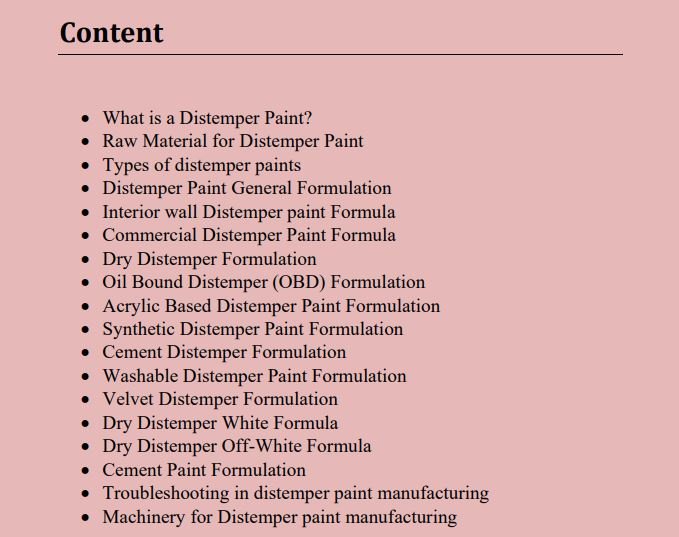
Distemper Paint Formulation
USD $65
PDF manual · Instant downloadPayment Methods
Refund Policy
Custom Formulation Services
Formulation Consultation
Contact Us
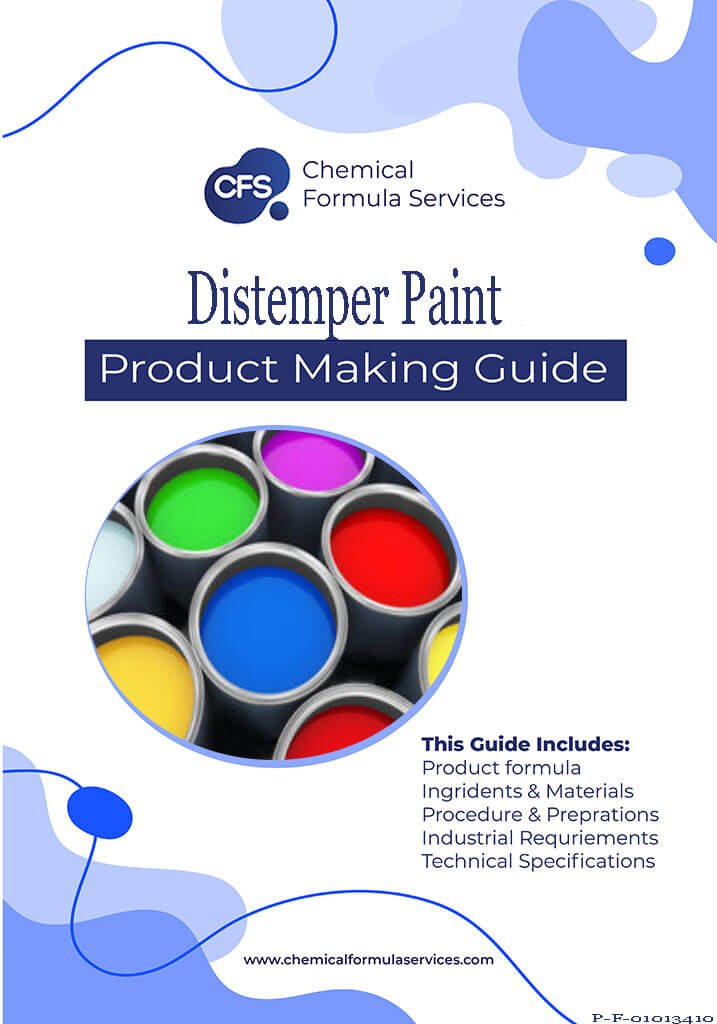
Distemper Paint Formulation is a type of water-based paint that is commonly used for interior wall surfaces. It is known for its matte or flat finish and is typically made with a combination of natural pigments, binders, fillers, and water. Here’s some information on distemper paint formulation:
Composition and Features:
- Binder: Distemper paint traditionally used natural binders such as animal glue or vegetable starch. However, modern distemper paints may utilize synthetic binders like acrylic or vinyl.
- Pigments: Distemper paint contains pigments that provide color and opacity to the paint. Natural pigments, like clay or chalk, are often used.
- Fillers: Inorganic fillers, such as calcium carbonate or talc, may be added to improve the paint’s consistency and coverage.
- Water-Based: Distemper paint is primarily water-based, making it easy to clean up and environmentally friendly.
Characteristics of Distemper Paint:
- Matte Finish: Distemper paint typically dries to a flat or matte finish, which gives a non-reflective appearance to the painted surface.
- Breathability: Distemper paint is breathable, allowing moisture vapor to pass through the painted surface. This characteristic helps in preventing moisture buildup and allows the wall to “breathe.”
- Limited Washability: Distemper paint is not as washable or scrub-resistant as other types of paints. Excessive cleaning or scrubbing may cause the paint to fade or peel.
- Quick Drying: Distemper paint dries relatively quickly, allowing for faster recoating or completion of painting projects.
Usage and Application:
- Surface Preparation: Ensure that the surface is clean, dry, and free from dust, grease, and loose particles. Repair any cracks or imperfections before painting.
- Primer: Depending on the condition of the surface, a primer may be required to promote adhesion and provide a smooth base for the distemper paint.
- Application Method: Distemper paint can be applied using a brush or roller. Start from the top and work your way down, maintaining a wet edge to avoid visible brush or roller marks.
- Multiple Coats: Distemper paint typically requires multiple coats to achieve a uniform and opaque finish. Allow each coat to dry before applying the next one.
- Clean-Up: Clean brushes, rollers, and other tools with water immediately after use.
Troubleshooting in distemper paint manufacturing
. Poor Pigment Dispersion
- Symptoms: Streakiness, color inconsistency, or poor coverage.
Inadequate Viscosity
- Symptoms: Paint is either too thick or too runny.
Settling or Separation
- Symptoms: Components separate over time, leading to settling at the bottom.
. Foaming and Air Entrainment
- Symptoms: Excessive foam during manufacturing or application.
Poor Adhesion
- Symptoms: Paint does not adhere well to the surface.
Drying Issues
- Symptoms: Paint takes too long to dry or dries too quickly.
Mold or Mildew Growth
- Symptoms: Visible mold or mildew growth in the paint or on painted surfaces.
. Color Variance
- Symptoms: Color does not match the expected outcome or varies between batches.
Surface Defects
- Symptoms: Cracking, peeling, or flaking after application.
. Odor Issues
- Symptoms: Unpleasant or strong odor from the paint.
Adhering to the CFS formulator’s guidelines is crucial for the accurate creation, processing, application, and drying of distemper paint, as well as for any particular recommendations provided. CFS distemper paint formulation represent a transformative approach to the business of paint manufacturing, offering an easy-to-make solution that does not compromise on quality, all while being cost-effective. This unique blend of affordability and high standards makes CFS formulations an ideal choice for those looking to excel in the paint industry.