Detergent Washing Powder Formula
USD $65
PDF manual · Instant downloadPayment Methods
Refund Policy
Custom Formulation Services
Formulation Consultation
Contact Us
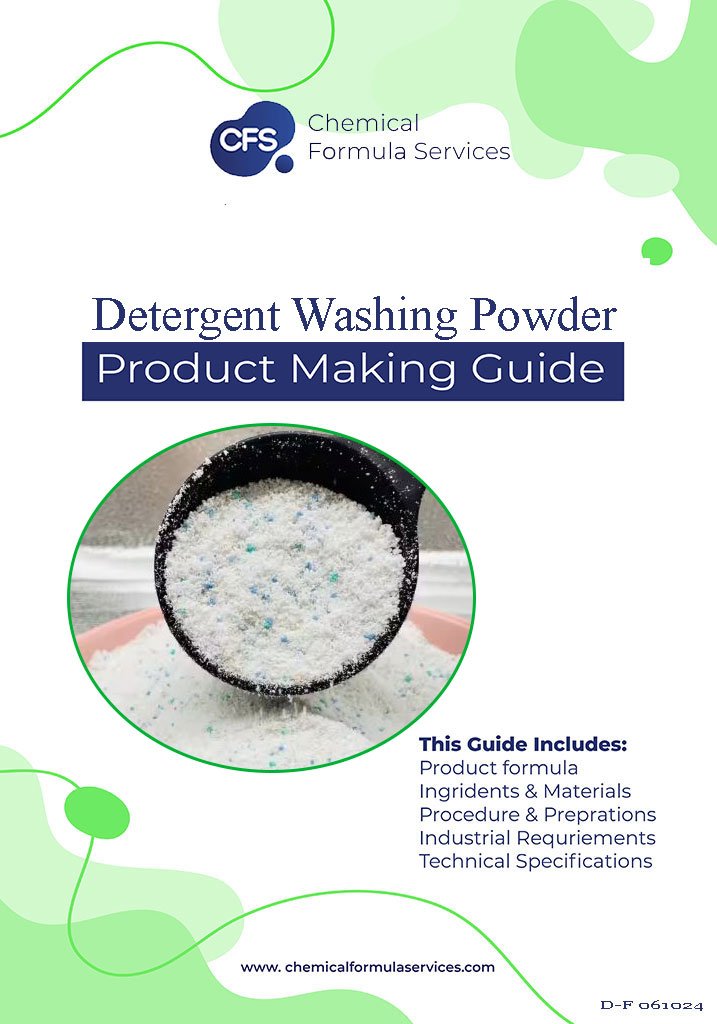
Detergent powder formula can vary significantly depending on the specific brand and type of detergent. A general list of common detergent powder ingredients found in many laundry detergent powders formulation
Detergent powder ingredients
- Surfactants: These are the primary cleaning agents in detergent powder formula . Common surfactants include:
- Sodium lauryl sulfate (SLS)
- Sodium laureth sulfate (SLES)
- Alkylbenzene sulfonates (LAS)
- Alcohol ethoxylates
- Builders: Builders are used to soften water and enhance the effectiveness of the surfactants. Common builders include:
- Sodium carbonate (soda ash)
- Sodium tripolyphosphate (STPP)
- Sodium silicate
- Zeolites
- Bleaching Agents: These detergent ingredients help to remove stains and whiten clothes:
- Sodium percarbonate (oxygen bleach)
- Sodium perborate
- Enzymes (protease, amylase, lipase, etc.)
- Fillers and Binders: These substances are used to bulk up the detergent powder formula and hold it together:
- Sodium sulfate
- Sodium chloride (table salt)
- Carboxymethylcellulose (CMC)
Other content of the formula
- Fragrances: Fragrances are added to provide a pleasant scent to the detergent formula.
- Optical Brighteners: These compounds make clothes appear brighter and whiter by absorbing UV light and re-emitting it as visible blue light.
- Stabilizers and Anti-redeposition Agents: These help prevent soil and stains from settling back onto the fabric during washing.
- Dyes and Colorants: These are added for aesthetic purposes to give the detergent formulation its color.
- Antifoaming Agents: These prevent excessive foaming during the washing process.
- Other Additives: Some detergents may contain additional additives for specific purposes because it is used as stain removers, fabric softeners, or anti-microbial agents.
The specific formulation of detergent powders can vary between brands and regions due to regulations and market preferences. Additionally, there has been a trend toward more environmentally friendly and phosphate-free detergent powder formulation in recent years to reduce the environmental impact of detergents.
Detergent making business
Starting a detergent powder making business can be a profitable venture.
Research and Planning:
- Study the market demand and competition in your area.
- Identify your target market, such as households, commercial establishments, or both.
- Determine the types of detergent powder you want to produce, such as laundry detergent, dishwashing detergent, or specialty detergents.
- Analyze the production process, ingredients, and equipment required.
- Business Plan:
- Create a comprehensive business plan outlining your objectives, target market, marketing strategy, production process, financial projections, and legal requirements.
- Determine your startup costs, including equipment, raw materials, packaging, and marketing expenses because it is necessary.
- Explore potential funding options if needed.
- Legal Requirements:
- Register your business and obtain necessary licenses and permits from local authorities.
- Comply with health and safety regulations and any specific regulations because it must be related to detergent manufacturing.
- Location and Infrastructure:
- Find a suitable location for your production facility. Consider factors like accessibility, space requirements, utilities, and storage facilities.
- Set up the necessary infrastructure, including production area, storage area, packaging area, and office space.
Detergent powder Equipment and Raw Materials
- Purchase the required equipment for detergent powder production, such as mixers, grinders, and packaging machines. Consider the capacity and efficiency of the equipment based on your production volume.
- Source high-quality raw materials, including surfactants, builders, fillers, fragrances, and packaging materials. Establish relationships with reliable suppliers.
- Production Process:
- Develop a standardized detergent powder production process. This may involve mixing and blending ingredients, granulation, drying, and packaging.
- Ensure strict quality control measures at every stage to maintain consistency and meet industry standards.
- Packaging and Branding:
- Design attractive packaging for your detergent powder products. Consider convenience, durability, and branding elements like logos, labels, and product information.
- Create a brand name and logo that resonates with your target market. Develop a marketing strategy to promote your brand and differentiate it from competitors.
- Distribution and Marketing:
- Establish distribution channels to reach your target market. This can include wholesalers, retailers, or direct sales to consumers.
- Develop marketing and promotional strategies, such as advertising, online presence, product demonstrations, and discounts.
- Build relationships with potential customers and offer excellent customer service.
- Compliance and Quality Control:
- Adhere to regulatory standards and guidelines for detergent manufacturing, labeling, and safety.
- Implement quality control measures to ensure consistent product quality but to perform a regular testing and analysis to meet customer expectations.
- Business Growth:
- Continuously monitor the market trends, customer feedback, and competition to adapt and improve your product offerings.
- Explore opportunities for product diversification, expanding into new markets, or introducing eco-friendly or specialized detergent products.
In the modern time detergent making business is becoming a very profitable business because it can be started from home based to industrial scale business.
These powder detergent formulations are very composed and specially designed for those people who are beginners in the industry because it is a startup project.
These formulas with bleach content make the white cloth with a bleaching agent but with optical brightener to make this formula so powerful . After making this detergent it is very difficult to fulfill the demand of the market.