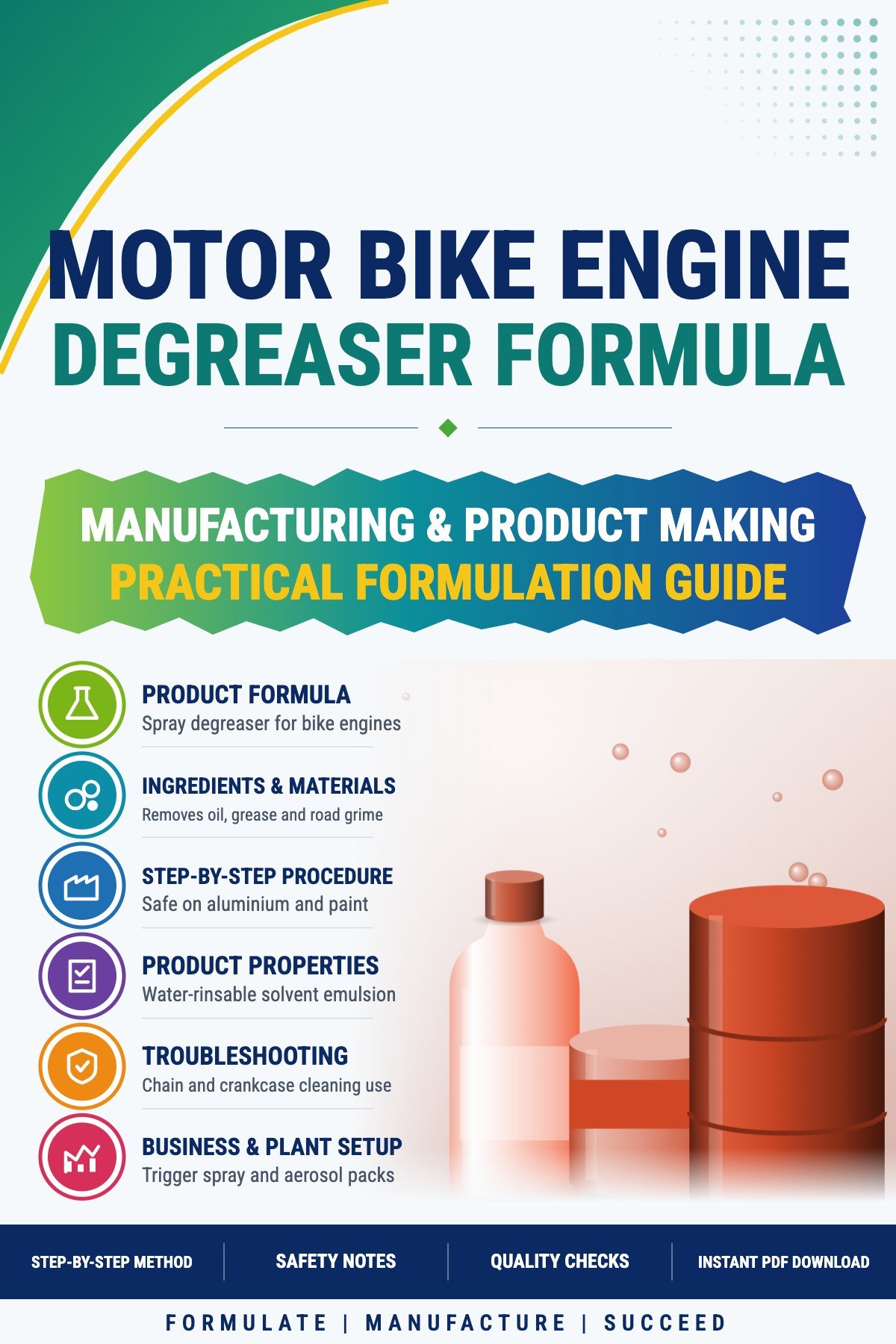

Motor Bike Engine Degreaser Formula
USD $65
PDF manual · Instant downloadMotor Bike Engine Degreaser Formula: a PDF guide to motorcycle engine degreasers, with surfactants, solvents, inhibitors, blending, safe use, testing and troubleshooting.
Payment Methods
Refund Policy
Custom Formulation Services
Formulation Consultation
Contact Us
A Motor Bike Engine Degreaser Formula helps remove grease, oil, dirt, brake and chain-lube residue and other contaminants from the engine and other key parts of a motorcycle. Engine degreasers are widely used to keep engines clean and running well, because a clean engine runs cooler, shows leaks early and resists corrosion. This practical PDF guide is for automotive chemical blenders, startups and entrepreneurs. This page explains how a motor bike engine degreaser formulation works, which solvents, surfactants and builders it uses, how it is made, tested and packed, and how to sell it.
This guide is published by Chemical Formulation Services, the formulation publishing and consultancy business of CFS Formulation Services Ltd in Sheffield, United Kingdom. It is written for people who want to understand the product from the raw material to the finished pack, and it keeps its claims practical rather than promotional.
At a glance
- Product: Motor Bike Engine Degreaser Formula, a digital PDF Product Making Guide.
- Also searched as: motor bike engine degreaser formulation, motorcycle engine cleaner, bike degreaser, chain cleaner, engine bay degreaser.
- Type: water-based emulsifying degreaser or solvent-assisted concentrate, rinsed with water.
- Key goals: fast grease removal, metal and paint safety, rinsability and low odour.
- Who it is for: auto chemical blenders, bike shops, workshops, detailing suppliers and entrepreneurs.
- Delivery: instant PDF download after payment is confirmed.
- Publisher: CFS Formulation Services Ltd, England and Wales company number 16678503.
What a bike engine degreaser must do
A motorcycle engine sits exposed in the airflow, picking up road dust, insects, chain lube, oil seepage and brake dust. Over time this builds into a thick film of grease and grit that traps heat, hides leaks and attacks metal. A good degreaser must loosen and emulsify oily films so they can be rinsed away, without harming aluminium and magnesium castings, anodised or painted surfaces, plastics, rubber seals, wiring and electrical parts. It should work in a few minutes, be easy to spray from a bottle or aerosol, and rinse clean without residue that attracts dirt.
Types of degreasers
Water-based alkaline degreasers
Use surfactants, builders and small amounts of solvent in water. Effective on oils and greases, safer to handle than strong solvents and increasingly preferred. Strong alkalinity can stain or etch aluminium, so pH must be controlled.
Solvent-based degreasers
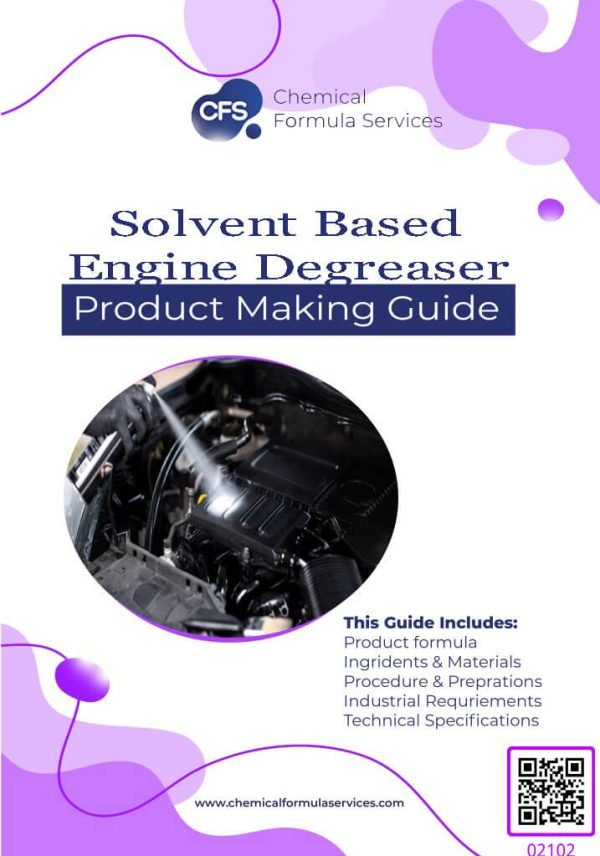
Hydrocarbon or glycol ether solvents dissolve heavy oil and grease quickly, often used for severe grime. They are flammable and may harm paint and plastics, and require care in storage and use.
Emulsifiable solvent degreasers
A solvent with emulsifier that is diluted or rinsed with water to give a milky emulsion, combining speed with water rinsability.
Aerosol degreasers
Fast and convenient, with solvents and propellant, popular for chain and sprocket cleaning.
Core ingredients
- Non-ionic surfactants: alcohol ethoxylates for wetting and emulsifying oils.
- Anionic surfactants: sulfonates or ether sulfates to boost cleaning and foam as desired.
- Solvents: glycol ethers (butyl glycol and similar), terpene or d-limonene, aliphatic hydrocarbons and isoparaffins.
- Builders: sodium metasilicate in low levels, sodium carbonate or amine alkalis for pH, balanced with inhibitors.
- Chelating agents: to deal with hard water and metal ions.
- Corrosion inhibitors: silicates, phosphate esters or organic inhibitors to protect aluminium and steel.
- Hydrotropes: to keep the concentrate clear.
- Fragrance and dye: for appeal and identification.
- Water.
Chain cleaners, wheel cleaners and the rest of the bike care range
Riders rarely buy a single product. The engine degreaser is the entry product, but customers also need a chain cleaner that dissolves old lube and road grit without harming O-rings and X-rings, a wheel and rim cleaner safe on alloys and powder coat, a bike wash shampoo, a matt and gloss detailer, and a protective spray for metals and plastics. Many of these use the same families of surfactants, solvents and inhibitors as your degreaser, so you can build a coherent range with very little additional raw material. Colour-code the labels, print simple use charts, and sell them in kits for beginners and in bulk sizes for shops and rental fleets.
Environmental responsibility and wash-water
Engine cleaning produces oily wash-water that should not flow directly to storm drains or soil. Encourage users to wash over a drip tray, use a drain mat or go to a wash bay with an oil separator. Choose readily biodegradable surfactants and avoid chlorinated and strongly aromatic solvents. For shops and workshops, offer solvent recycling advice and safe disposal guidance for used degreaser and rags. Responsible chemistry, clear labels and practical advice give your brand a good name, which matters to committed riders and to businesses facing environmental inspection.
Selling through bike shops, garages and online
Motorcycle shops are the best first channel because staff speak directly to riders and trust products that work. Provide sample bottles, a side-by-side demonstration and a counter display. For online selling, short videos showing a grimy engine before and after, with the product name and basic instructions, tend to convert well. Offer bulk jugs to garages and rental companies, and keep prices fair compared with leading brands. Reviews from riders and mechanics help build confidence quickly.
What is inside the Motor Bike Engine Degreaser Formula guide
The guide explains that motorcycle engine degreaser, or motorbike engine cleaner, helps remove grease, oil, dirt, fluids and other contaminants from the engine and other critical parts of the motorcycle, is used to clean and support engine performance, and protects against corrosion, much like car engine degreasers. It supplies recipes for water-based and solvent-assisted versions, blending steps, testing and application advice.
Blending process
Step 1: Water and builders
Charge soft water to a stirred stainless steel or plastic tank. Dissolve chelating agent and mild builders.
Step 2: Surfactants and hydrotrope
Add non-ionic and anionic surfactants slowly to limit foam, then hydrotrope until clear.
Step 3: Solvent and inhibitors
Blend in glycol ether or terpene solvent, then corrosion inhibitors. Add fragrance and dye last.
Step 4: Adjust and filter
Check pH, usually between 9 and 11 for a water-based concentrate, or milder for sensitive metals, and adjust. Filter and fill into bottles with trigger sprayers, jugs or aerosol cans under proper filling conditions.
How riders should use it
Work on a cool engine, never a hot one. Park the motorcycle on a stand, cover the air intake, exhaust outlet, electronics, battery and brake discs, and avoid spraying into the carburettor or electrical connectors. Spray the degreaser onto the engine, allow it to dwell for a few minutes without letting it dry, agitate stubborn areas with a soft brush, and rinse with low-pressure water from a hose, avoiding high-pressure jets directly into bearings, seals and electrics. Dry with compressed air or cloth, then lubricate the chain and apply corrosion protection to bare metals. Collect runoff and dispose of it responsibly rather than letting oily water enter drains.
Material compatibility
Test any degreaser on a hidden area. Strong alkalis can darken or etch raw aluminium and magnesium; solvents can soften rubber, damage clear coats, decals and plastics; O-ring chains need chain-safe cleaners that do not dry out seals. Provide a compatibility note on your pack, and offer a mild version for painted and anodised parts and a stronger one for heavily soiled steel components.
Testing and quality control
- Appearance, pH and density.
- Cleaning performance on oiled and soot-coated test panels.
- Rinsability and residue.
- Foam behaviour.
- Corrosion tests on aluminium, steel and brass strips.
- Compatibility with paint, plastics and rubber.
- Flash point for solvent versions.
- Storage stability including cold and heat.
Troubleshooting
Leaves white film on aluminium
Alkalinity too high or poor rinsing. Lower pH, add inhibitor and rinse thoroughly.
Slow action on thick grease
Not enough solvent or low dwell time. Raise solvent level or extend dwell.
Product separates
Poor coupling. Add hydrotrope and adjust order of addition.
Excess foam on rinse
Too much anionic surfactant. Balance with non-ionics or add defoamer.
Strong smell
Aromatic or low-grade solvents. Use deodorised hydrocarbon or glycol ether.
Trigger spray clogs
Particles or crystallised ingredients. Filter and adjust solubility.
Safety and regulation
Alkaline concentrates irritate eyes and skin, and solvents can be flammable and harmful if inhaled. Provide labels with hazard pictograms, safety data sheets and instructions to wear gloves and eye protection, use in ventilated areas and keep from heat sources. Never mix with bleach, acids or other chemicals. Check VOC limits, aerosol regulations and discharge rules in your market. Keep products out of reach of children. Do not use on a hot engine, and keep spray away from brakes, because contamination of brake discs and pads is dangerous.
Packaging and business opportunity
Trigger bottles of 500 millilitres to 1 litre, aerosol cans of 400 to 500 millilitres and 5 to 20 litre pails serve riders, shops and workshops. Customers include motorcycle owners, rental firms, courier fleets, bike shops and detailers. Bundle with chain cleaner, chain lube, wash shampoo and microfibre cloths for a complete cleaning kit. Private-label supply for motorcycle accessories brands and online sellers is a good route, and clean-before-and-after videos build credibility.
Extend your automotive range with the Auto Care Products, Cleaning Products, Detergent Formulations and Lubricant Formula categories, and see Touchless Car Wash Formula, , Heavy Duty Truck Wash Detergent, , Car Wash and Wax Formulation and White Grease Lubricant Formula.
Getting started
Create a water-based degreaser with non-ionic and anionic surfactants, glycol ether and a mild builder. Test it on greasy aluminium and steel samples, adjust pH and inhibitors, then compare with a market leader. Prepare labels, instructions and safety data, and distribute sample bottles to local bike shops.
How to get the best results from this guide
Treat the guide as a tested starting point rather than a finished factory. Begin with a small trial batch in the laboratory or on a bench, using the exact raw materials you plan to buy, and record every weight, temperature, mixing time and observation. Compare the result with the quality checks in the guide, change only one thing at a time, and keep a note of what each change did. Once a small batch is consistently good, repeat it several times, then scale up in stages, because mixing, heating and cooling behave differently in larger vessels. Keep retained samples of every batch, write simple standard operating procedures for your team, and build relationships with two suppliers for each key raw material. Finally, check the labelling, safety and product rules in the country where you will sell, and ask a qualified person to review your process. This careful, documented approach is what turns a good formulation into a reliable product and a trusted brand.
Who should buy this guide?
The guide is written for practical readers. It suits manufacturers who want to add a new product to an existing plant, startups choosing their first product, private-label brands that need to understand what they are buying, technical staff who must set specifications and train operators, and consultants and students who want a structured, plain-language reference. It is less suitable for anyone looking for a quick shortcut or a guarantee, because every formulation still needs testing with your own materials, equipment and local rules. If you are unsure whether it matches your project, send a short question through the contact page before you order, and we will tell you honestly whether it fits.
What is inside the Motor Bike Engine Degreaser Formula guide
Every Product Making Guide in our shop follows the same structure so you know where to look. This guide includes the product formula, the ingredients and materials, the procedure and preparations, the industrial requirements and the technical specifications. In practice you receive:
- The formulation, written so you can follow it at the bench and scale it up.
- Ingredients and materials, with the job of each material and advice on grades and suppliers.
- The manufacturing procedure, including order of addition, mixing and preparations.
- Industrial requirements, covering equipment, space and packaging.
- Technical specifications, describing what a good finished product should look like and how it should behave.
- Troubleshooting for the faults that makers meet most often.
- Business guidance, to help you take the product from the bench to the market.
These Product Making Guides of chemical formulations and formulas are for manufacturers, startups and entrepreneurs. Every guide contains industrially tested, practical formulations. Anyone who buys a guide can make the product by following its step-by-step instructions. Raw materials vary between suppliers, so always confirm your results with a small trial batch before scaling up.
Who stands behind this guide?
Chemical Formulation Services is the trading name of CFS Formulation Services Ltd, registered in England and Wales under company number 16678503, with its office at Unit F, Winston Business Park, Churchill Way, Sheffield S35 2PS. The business was founded by George Enrick and publishes formulation manuals, technical guides and industry reports. You can check our details on the Companies House register, read about us, or contact us with any question before you order.
A written formulation cannot replace testing with your own raw materials, equipment and climate, and we say so plainly. What the guide does give you is a tested, structured starting point that can save you months of trial and error. Our terms and conditions explain what a purchase from us covers.
How to order
- Select Add to cart to keep browsing, or Buy Now to go straight to checkout.
- Pay with PayPal, Stripe, Xoom by PayPal, Payoneer, payment links for debit and credit cards, or Western Union, Ria and all money exchanges.
- If you pay through a money exchange, email your payment slip to Info@chemicalformulationservices.com. After confirmation, your instant download link is emailed to you.
- For online payments, the PDF is available as soon as the payment is confirmed.
All products are digital downloads and all payments are nonrefundable once the file is delivered, so please read the refund policy and the FAQs before you order. You can compare this guide with others in the formula shop or browse our industrial project reports.
Frequently asked questions about motor bike engine degreaser formula
What is the Motor Bike Engine Degreaser Formula guide?
It is a digital PDF Product Making Guide to motorcycle engine degreasers, covering types, ingredients, blending, use, testing, safety and troubleshooting.
Is it safe on aluminium?
It can be if pH is controlled and corrosion inhibitors are used, but always test a hidden area first.
Should I spray on a hot engine?
No. Always work on a cool engine and avoid brakes, electrics and air intakes.
Can I use pressure washers?
Only with caution. High pressure can force water into bearings, seals and electrics.
What is the difference between water-based and solvent degreasers?
Water-based types are safer to handle, while solvent types act faster on heavy grease but are flammable.
How do I receive the guide?
You receive an instant PDF download after payment is confirmed. For money exchanges, email your payment slip to Info@chemicalformulationservices.com and the link is emailed after we confirm it.
Is the payment refundable?
All payments are nonrefundable because the product is an instant digital download. See the refund policy for details.
Can you help with a custom formulation?
CFS Formulation Services Ltd offers formulation and product development consultancy. Send a short brief through the Contact page.
Last reviewed: November 2026. This page is general information about a digital product. It is not a safety data sheet or professional advice, and any formulation should be tested and reviewed by a qualified person before commercial use.